
How to Prepare for a Professional Carpet Clean in Bristol and Bath
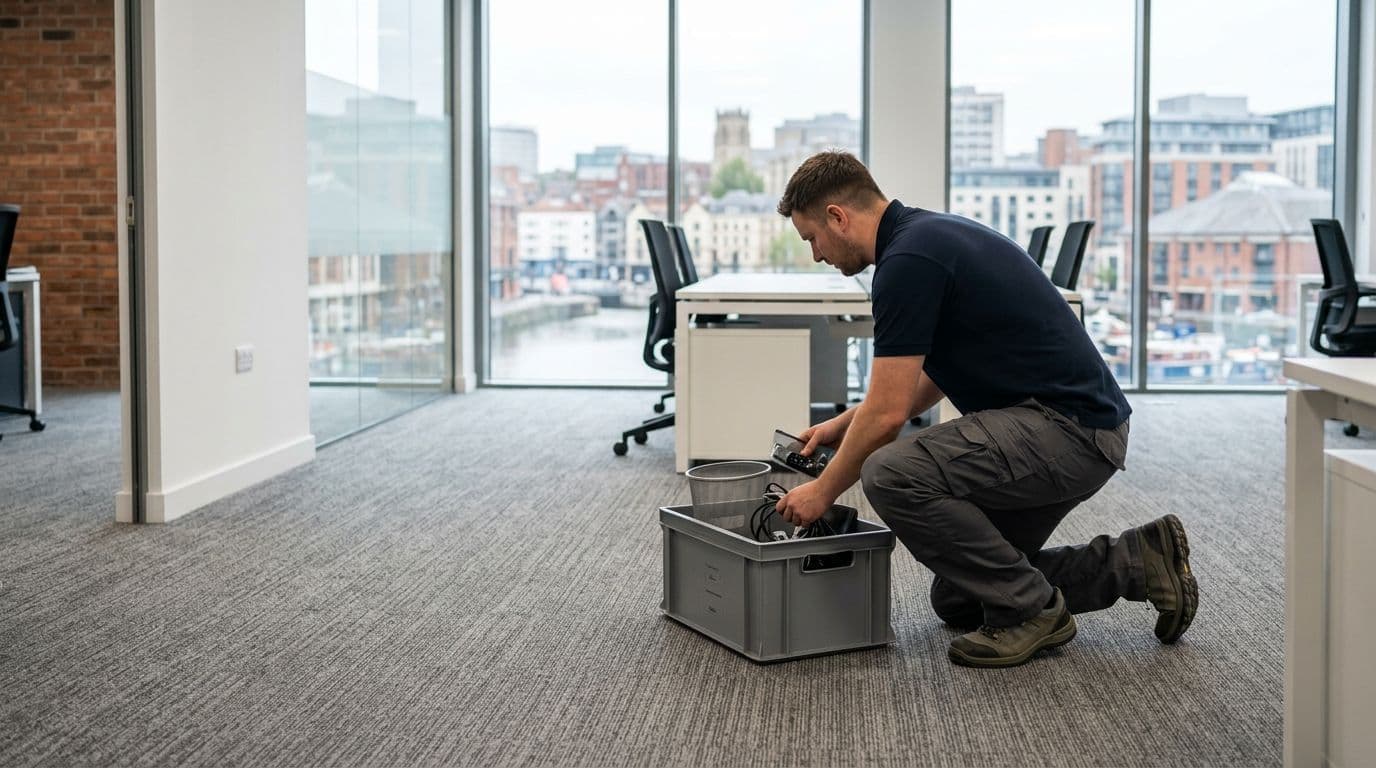
Preparation is an important part of a successful commercial carpet-cleaning visit. For an office, school, care setting or other business premises, the aim is not simply to make the carpet look tidy. You need to give the technician safe access, provide useful information about the site and plan how people will use the building while the carpet dries.
This guide explains how to prepare for a professional carpet clean in Bristol or Bath. It separates the actions your team should take from the points to confirm with the cleaning provider, so you can reduce avoidable disruption and make the handover straightforward.
Before you book: create a site plan
Start by listing the areas that need attention. Include reception areas, corridors, lift lobbies, stairways, meeting rooms, classrooms, communal areas, offices and entrance mats. Record which spaces must remain operational and whether the work needs to be completed in phases.
During a walk-through, note:
- High-traffic routes, particularly entrances, reception areas, corridors and approaches to kitchens or lifts.
- Coffee, food, ink or other visible stains, including their approximate location.
- Persistent odours, heavily soiled lanes or areas affected by tracked-in grit.
- Carpet types or fibres if known, such as nylon or a more delicate material.
- Fixed furniture, filing cabinets, equipment and areas the technician may need to work around.
- Previous repairs, loose edges, damage or consumer cleaning products already used.
- Access restrictions, narrow doorways, stairs, lifts and loading or parking arrangements.
This information allows the provider to assess the site and discuss a suitable method. Urban Cleaning Ltd provides carpet cleaning in Bristol and Bath. You can review the carpet cleaning service in Bristol and Bath when planning the visit.
Do not assume every carpet requires the same treatment. Hot water extraction, sometimes called steam cleaning, may be suitable for a deep clean, while a low-moisture or encapsulation approach may be more appropriate where minimal moisture or faster access is important. The technician should confirm the method after considering the carpet, soiling, access and operating requirements.
1. Choose the cleaning window and protect business continuity
Select a time when the affected areas can be controlled. Depending on the premises, that might be an evening, weekend, school closure, quieter trading period or a phased room-by-room appointment.
Before confirming the date, agree:
- Which rooms, floors or corridors will be unavailable.
- Whether the work will take place in one visit or in phases.
- How long people should stay away from treated areas, based on the method and site conditions.
- Where staff, visitors, pupils, residents and contractors should walk instead.
- Who will meet the technician and remain responsible for the site.
- How keys, alarms, reception procedures and lift access will be managed.
- Whether van parking or a loading point needs to be reserved.
- What ventilation is available and whether the building has restrictions on opening windows or doors.
For example, an office facilities manager might arrange an evening clean, reserve a suitable parking space and email staff before they leave. The message could ask employees to remove bags and items from the floor, avoid the treated corridor the following morning if it remains restricted, and use an alternative route if required.
For a school, weekend access may be simpler than working around pupils. In a care setting, the plan should also account for resident movement, supervision and any site procedures relating to equipment, chemicals or communal areas.
2. Clear the carpeted areas
Remove small and loose items from the carpet before the cleaning team arrives. This includes:
- Bags, boxes and waste bins.
- Loose papers, books and toys.
- Cables that can be safely moved or secured.
- Freestanding displays, plant pots and small equipment.
- Chairs, lightweight tables and other movable items, where agreed.
Keep the route from the entrance to each treatment area clear. Professional equipment may need to pass through doorways, corridors and lifts, so access should be considered as carefully as the carpet itself.
Agree what happens to furniture
Ask the provider what technicians normally move. Light chairs, bins and small tables may be movable, but you should not assume that beds, filing cabinets, large cupboards, electronics or clinical equipment will be moved. Fixed or heavy furniture may need to remain in place and be cleaned around.
Before the appointment, confirm:
- Which items your team should move.
- Which items the technician can move safely.
- Whether furniture will be returned after cleaning.
- Whether protective pads or blocks are needed beneath furniture during drying.
- Which items must not be moved for safety or operational reasons.
- Whether any limitations or additional arrangements apply.
A business owner may leave heavy filing cabinets in place, mark them on the site plan and ask the technician to clean as far underneath them as safely possible. A care setting might move ordinary chairs but leave clinical equipment for authorised staff to manage.
3. Vacuum thoroughly, but do not pre-treat without advice
Vacuum all accessible carpet, concentrating on entrances, reception areas, corridors and visibly gritty sections. Pre-vacuuming removes loose dry soil before moisture is introduced, helping the professional cleaning process focus on embedded dirt rather than surface debris.
Do not apply a household stain remover immediately before the appointment unless the professional cleaner has instructed you to do so. Some products can interfere with subsequent treatment, and aggressive scrubbing may spread a mark or damage the fibres.
Instead:
- Blot a fresh liquid spill gently if necessary.
- Note what caused the mark and when it happened.
- Record any product already applied.
- Leave specialist stain treatment to the technician.
- Avoid over-wetting the carpet.
If entrance mats are included in the scope, lift or identify them and confirm this with the provider. Do not assume that adjacent mats, upholstery or hard flooring are automatically part of the carpet-cleaning appointment.
4. Brief staff, visitors and occupants
A clear message prevents people from undoing the preparation or entering a work area unexpectedly. Tell relevant people:
- Which areas are being cleaned.
- When those areas will be unavailable.
- What needs to be removed from floors before the appointment.
- Which alternative routes or rooms should be used.
- Whether outdoor shoes, food, drinks or equipment must be kept away from treated carpet.
- Who to contact if access is needed during the work.
In an office, ask staff to clear floor-level belongings before leaving. In a school, brief staff about pupil routes and supervision arrangements. In a care setting, agree how residents will be kept away from wet carpet and how staff will use an alternative route.
The site contact should also tell the technician about safeguarding, infection-control, chemical, noise or ventilation procedures that apply to the premises. This is particularly important where vulnerable people, children or sensitive equipment are present.
5. Share useful information with the technician
A professional can make better decisions when the site information is accurate. During the pre-cleaning discussion, identify each important problem rather than pointing vaguely to a room.
Explain:
- The substance involved, if known, for example coffee, ink, food or tracked-in soil.
- How old the stain is.
- Whether it has been treated before.
- Whether an odour is localised or recurring.
- Which areas receive unusually heavy foot traffic.
- Whether the carpet has been repaired, is loose or shows existing damage.
- Whether there are concerns about moisture, access or delicate fibres.
For example, note “ink mark beneath the second workstation” rather than simply “stain in the office”. Point out coffee staining near the staff kitchen and explain if a consumer product has already been used. This gives the technician a chance to assess the area and set realistic expectations.
No cleaning method can guarantee the removal of every mark. Some stains may have altered the carpet’s colour, while previous treatments or prolonged soiling may affect the result. Ask what is likely to be treatable and what may remain visible before work begins.
6. Prepare the site for the cleaning visit
On the day, meet the technician at the agreed access point and provide the site plan, keys, parking details and contact information. Walk through the treatment areas together if possible.
Keep people and unprotected equipment out of active work zones. Follow the provider’s instructions about wet-floor signs, barriers and alternative routes. Make sure corridors, lifts and fire-safety routes remain managed in line with your own building procedures.
Ventilation can assist drying, but it should be handled according to the cleaning method and the building. Open doors or windows only where appropriate, and do not use unsuitable fans or equipment in a way that creates a safety risk. The technician should explain the practical drying guidance for your carpet and premises.
If cleaning is phased, record which rooms have been completed and which remain in use. This prevents staff from walking through a treated area simply because another part of the building is still open.
7. Manage drying, inspection and reopening
There is no universal drying time. Drying depends on the cleaning method, carpet construction, moisture used, airflow, temperature, humidity and the condition of the building. Ask the technician what to expect for the specific site.
Until the professional advises that an area can be used:
- Keep people away from treated carpet.
- Leave signs or barriers in place.
- Keep outdoor footwear and wheeled equipment off the area.
- Do not replace furniture unless the cleaner confirms that it is suitable.
- Follow any advice about protective pads or blocks beneath furniture.
- Maintain the agreed ventilation arrangements.
Complete a room-by-room handover before normal use resumes. Check that:
- The intended areas were accessible and treated.
- No room was missed because it was occupied or obstructed.
- Barriers and signs are positioned correctly while required.
- There are no unexpected damp patches or access problems.
- Furniture is where it should be and has suitable protection if advised.
- Remaining marks or odours have been recorded for follow-up.
- The site contact understands when each area may reopen.
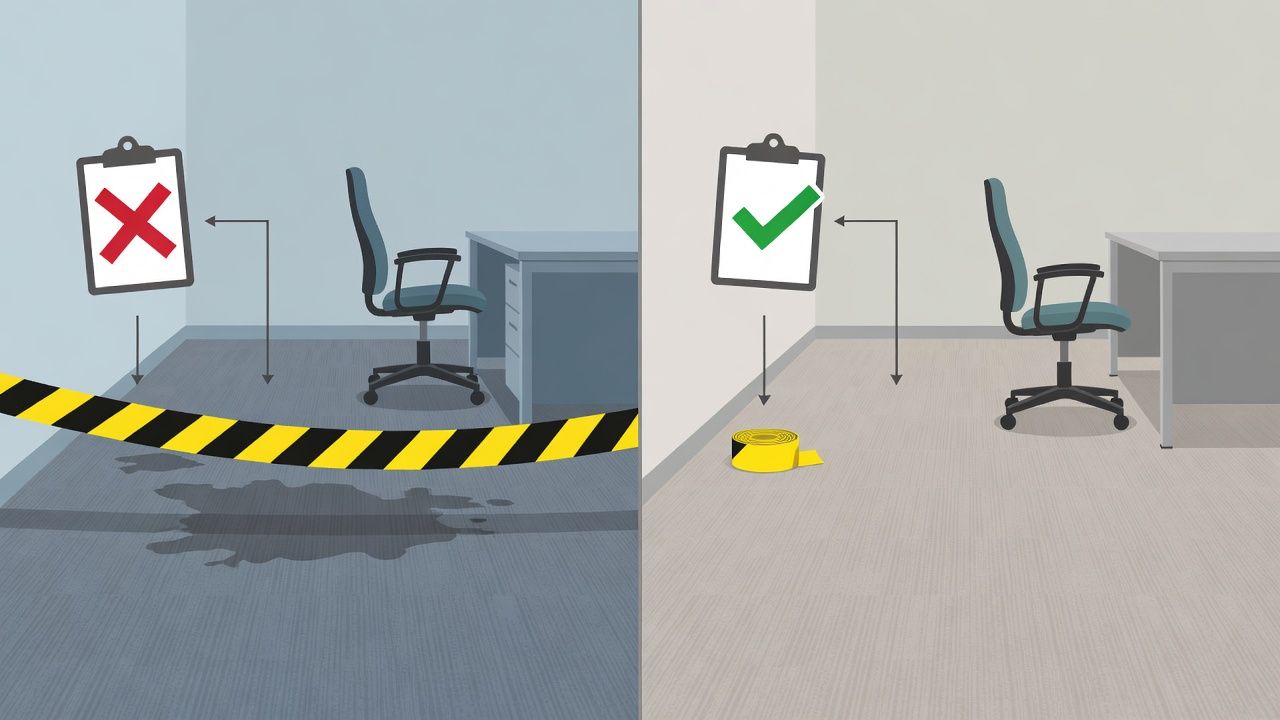
Check the area, access controls and site handover before normal use resumes.
If a mark appears unchanged or an odour returns, report it promptly and explain what you have observed. Do not immediately apply another household chemical. Ask whether the area needs further assessment, additional treatment or a different solution.
For ongoing planning, use traffic and operating conditions rather than a fixed calendar alone. Our guide on how often offices should have carpets cleaned covers scheduling, and your own inspection records can help determine what interval suits the building.
Troubleshooting common preparation problems
The cleaner cannot reach part of the carpet
If furniture, boxes or equipment block access, tell the technician before work starts. Move only items your team is authorised and equipped to handle. Record any excluded areas in the handover so they are not mistaken for missed work.
Staff have already used a stain remover
Tell the technician exactly what was used and, if possible, when it was applied. Do not add another product to counteract it. The technician can assess whether the residue or carpet fibre affects the planned treatment.
The building must remain partly operational
Use a phased plan. Separate treated and untreated areas, provide an alternative route and identify a site contact who can control access. Cleaning one floor, corridor or room at a time may be more practical than closing the whole premises.
The carpet cannot be left to dry without foot traffic
Discuss this before booking. The provider may recommend a different method, a different cleaning window or a phased approach. Do not assume that a low-moisture method is suitable without an assessment of the carpet and soiling.
A stain or odour remains after cleaning
Record the exact location and raise it during handover. Some marks involve permanent colour change, fibre damage or a source beneath the carpet rather than removable surface soil. Further treatment should be based on an assessment, not repeated household applications.
Completion check for the cleaning day
Use this checklist before the technician arrives and again at handover:
- The cleaning areas, exclusions and high-traffic zones are documented.
- The date, access window, parking, keys, lifts and site contact are confirmed.
- Staff, visitors and vulnerable occupants have been informed.
- Alternative routes and arrangements for unavailable areas are ready.
- Loose items, floor-level cables and agreed light furniture have been cleared.
- Heavy, fixed or sensitive items are identified and not moved without authorisation.
- Carpet fibres, stains, odours, previous products and existing damage have been disclosed.
- Accessible carpet has been vacuumed.
- No unapproved stain remover has been applied immediately before the visit.
- Wet areas, barriers, signs and ventilation arrangements are understood.
- The technician has explained drying and reopening guidance for the site.
- The handover records treated areas, unresolved issues and next actions.
When every relevant item is confirmed, the premises is ready for the visit. The final decision to reopen should come from the agreed site contact, following the professional’s guidance for the particular carpet and cleaning method.
Urban Cleaning’s carpet-cleaning information for Bristol and Bath can help you prepare questions about your premises. You can also find further practical guidance on the Urban Cleaning blog, visit the Urban Cleaning home page, or contact the team on 0117 332 1241 or admin@urbancleaning.co.uk, Monday to Friday, 08:00 to 17:00.