
Office Cleaning Schedule: Daily, Weekly and Monthly Guide
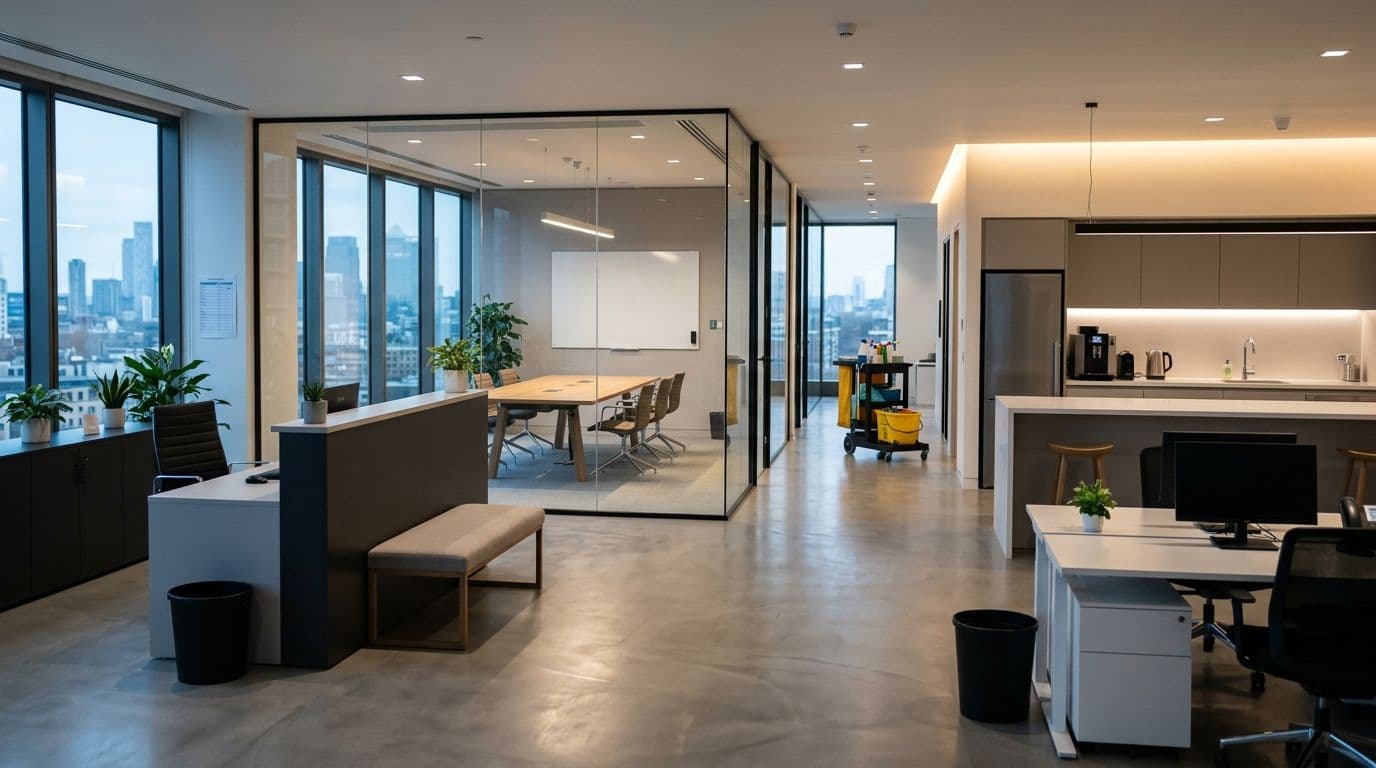
A useful office cleaning schedule does more than list chores. It states what needs cleaning, how often, who is responsible and how completion will be checked.
For most offices, washrooms, kitchens, waste, high-touch surfaces and visible spills need attention on occupied days. Broader dusting, detailed floor care, glass cleaning and high-level work can usually be planned weekly, monthly or periodically. The right frequency depends on occupancy, footfall, food preparation, visitors, surface types and the condition of the workplace.
This guide gives office and facilities managers a practical framework covering:
- daily or occupied-day tasks;
- weekly and monthly detail work;
- quarterly or periodic deep-cleaning;
- ownership between cleaners, staff and facilities teams; and
- simple checks to confirm that the schedule is working.
A schedule should be adapted to the building rather than copied unchanged. A small hybrid office, for example, may need washroom, kitchen and touchpoint cleaning on its busiest days, while detailed dusting can take place on a quieter day.
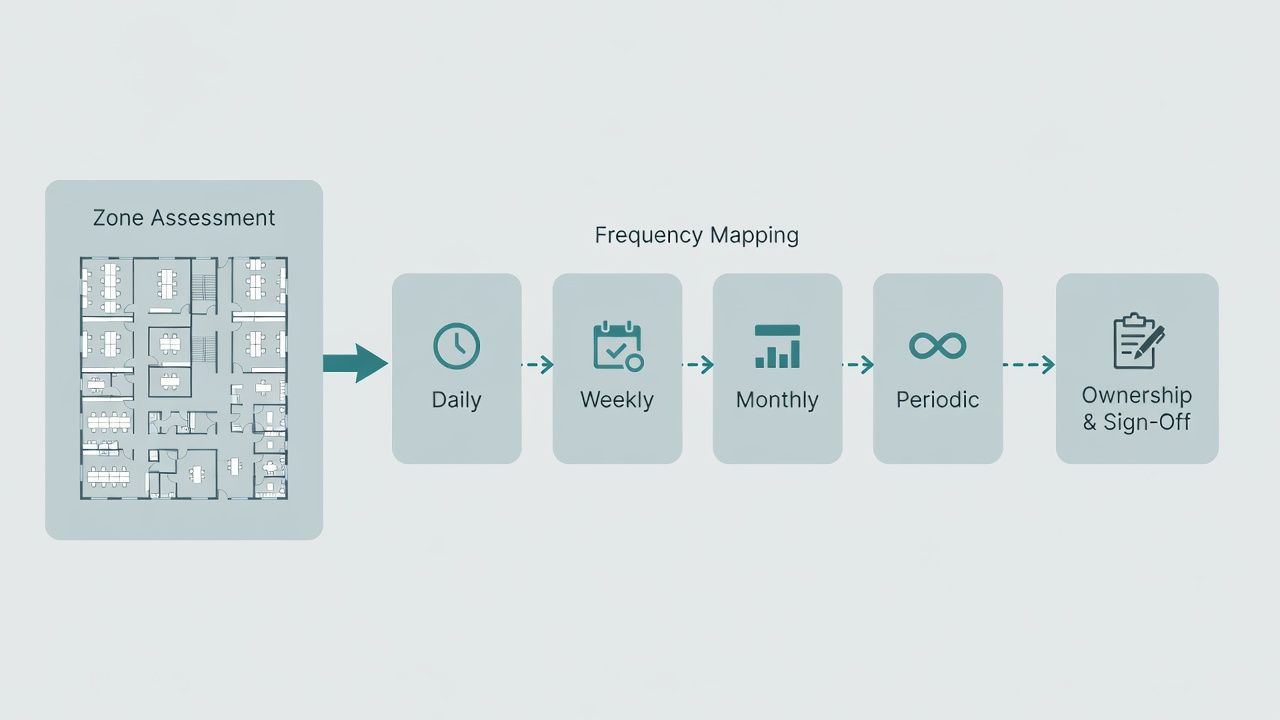
Use zones and frequencies to turn a general checklist into an actionable office cleaning schedule.
How to structure an office cleaning schedule
Start by dividing the workplace into zones. Common zones include:
- washrooms;
- kitchens and break rooms;
- reception and entrances;
- workstations and open-plan areas;
- meeting rooms and shared equipment; and
- floors, storage areas and circulation routes.
For each zone, record five things:
- The task: what must be cleaned or checked.
- The frequency: daily, occupied-day, weekly, monthly or periodic.
- The owner: cleaner, day porter, staff member or facilities lead.
- The method or product: where this matters for safety or surface protection.
- The verification: how completion or an exception will be recorded.
Keep the schedule visible and realistic. A long list that cannot be completed during the available service window is less useful than a prioritised plan with clear standards.
Daily or occupied-day cleaning tasks
Daily work protects hygiene-critical areas and keeps the office presentable. In a hybrid workplace, “daily” may mean every day the office is occupied rather than every calendar day, but heavily used areas may still need more than one check.
Washrooms
The daily washroom block should normally include:
- disinfecting toilets, urinals, seats, sinks and taps;
- cleaning mirrors and removing marks from partitions and doors;
- sweeping and damp-mopping floors with a suitable product;
- emptying general and sanitary waste bins;
- replenishing toilet tissue, hand towels, soap and other agreed consumables; and
- reporting leaks, blocked fixtures, damaged dispensers or other defects.
Busy washrooms may need an additional daytime inspection or touch-up. The schedule should distinguish between a full clean and a quick check for spills, odours, supplies and obvious defects.
Kitchens and break rooms
Food areas can deteriorate quickly, particularly where staff prepare meals throughout the day. Include:
- sanitising counters, tables and sinks;
- cleaning taps, handles and other frequently touched points;
- wiping the outside of kettles, microwaves, coffee machines and fridges;
- removing food waste and replacing liners;
- spot-cleaning or mopping floors after spills; and
- replenishing agreed supplies such as hand soap, paper towels and washing-up liquid.
Decide separately who removes unclaimed food from the fridge. Cleaners can carry out the agreed cleaning task, but staff should follow the office’s food-labelling and disposal policy.
Entrances, reception and high-touch points
The entrance often receives the heaviest footfall and shapes visitors’ first impression. Daily tasks can include:
- wiping door handles, push plates and access points;
- cleaning light switches, lift buttons and stair rails where applicable;
- wiping reception desks, guest seating and sign-in equipment;
- spot-cleaning entrance glass and removing marks from doors;
- vacuuming or shaking out entrance mats as appropriate; and
- cleaning shared equipment buttons on printers, photocopiers and similar devices.
High-touch cleaning should focus on actual use rather than treating every surface identically. A lightly used private office does not require the same attention as a shared meeting-room door or busy reception desk.
Workstations, meeting rooms and floors
Routine daily work may include emptying waste bins, removing visible spills, vacuuming traffic lanes and cleaning shared tables. Personal desks should be cleared by employees before service. Cleaners should not move confidential papers, personal belongings or specialist equipment without an agreed instruction.
Meeting rooms also need attention after heavy use. Wipe tables, chair arms, remote controls and other shared touchpoints, and check that food waste and cups have been removed.
Weekly office cleaning tasks
Weekly work deals with gradual build-up and surfaces that do not need attention on every visit. Depending on the office and its service arrangement, schedule tasks such as:
- vacuuming carpets thoroughly, including edges, corners and accessible areas beneath desks;
- cleaning interior glass, partitions and meeting-room doors;
- dusting window sills, ledges, shelving and cabinet fronts;
- cleaning microwave interiors and checking the agreed fridge policy;
- sanitising shared phones, keyboards, mice and other communal equipment with suitable products;
- damp-wiping skirting boards in busy routes; and
- cleaning meeting-room tables, chairs and shared presentation surfaces.
The phrase “clean the office” is too broad to be useful in a contract or checklist. “Vacuum all carpeted areas, including edges and accessible areas under desks, every Friday” gives the cleaning team and the facilities manager a shared standard.
Monthly office cleaning tasks
Monthly work targets dust and marks that accumulate slowly or appear above normal eye level. A monthly block may include:
- high-level dusting of vents, air returns, ceiling corners and cabinet tops;
- cleaning blinds and other window coverings;
- deep-cleaning the inside of fridges and agreed kitchen cupboards;
- cleaning the outside of light fittings;
- damp-wiping skirting boards throughout the building;
- cleaning behind and beneath movable furniture where safe and practical; and
- vacuuming upholstery in meeting rooms, reception areas and shared seating.
High-level cleaning needs appropriate access equipment and should not be improvised with unstable chairs or desks. If vents, ceiling fixtures or other building systems require specialist maintenance rather than surface dusting, assign that work separately.
Quarterly and periodic cleaning
Some work should be scheduled according to traffic, condition, season or building requirements rather than forced into a daily or monthly routine. Possible periodic tasks include:
- hot-water extraction of carpet traffic lanes or other heavily soiled areas;
- machine scrubbing or recoating hard floors where the finish and condition require it;
- interior and exterior window cleaning;
- deep cleaning of upholstered chairs and sofas;
- detailed cleaning of grout, tiled areas and hard-to-reach surfaces; and
- a review of cleaning equipment, stock and the schedule itself.
The frequency should be agreed with the building manager or contractor. Factors include footfall, weather, entrance dirt, furniture use, spills and the manufacturer’s instructions for flooring and fabrics.
Who should own each task?
A schedule becomes actionable when responsibility is explicit. A practical division is:
Professional cleaners or a day porter
Assign the routine cleaning scope to the cleaning team, including washrooms, kitchen surfaces, floors, waste, high-touch areas and agreed shared spaces. The written scope should state which tasks are included at each frequency and which are additional periodic services.
Employees
Staff should clear personal desks, store belongings safely, remove food according to office policy and report spills, damage, blocked facilities or low consumables promptly. This is shared workplace responsibility, not a substitute for planned Office cleaning and commercial cleaning services.
Office manager or facilities lead
The facilities owner should maintain the master schedule, brief staff and contractors, arrange access, review products and safety information, inspect representative areas and arrange periodic work. They should also resolve overlaps, such as whether the cleaner or staff team checks fridge contents and who orders replacement consumables.
For example, cleaners may complete the washroom block, employees may clear desks before evening service, and the facilities lead may review the log the next morning and escalate a missed task.
Adapting the schedule for hybrid working and occupancy
Occupancy is important, but it is not the only factor. Adjust the schedule for:
- the number of people using the office;
- peak visitor and meeting days;
- food preparation and catering;
- hot-desking and shared equipment;
- spill and slip risks;
- seasonal dirt brought in through entrances; and
- any change in the business, layout or building works.
A mainly hybrid office may need fewer interventions at individual desks but still require occupied-day cleaning of kitchens, washrooms, entrances and shared equipment. On a peak day, prioritise those areas and meeting rooms. On a quieter day, complete planned detail work such as blinds, cabinet tops or high-level dusting.
Review the schedule after an office move, refit, headcount change, new catering arrangement, increase in hot-desking or repeated complaint. The Workplace (Health, Safety and Welfare) Regulations 1992 require workplace premises, furniture and fittings to be kept sufficiently clean and waste to be kept in suitable receptacles. A risk-based schedule helps managers demonstrate that cleanliness is being actively managed, but it is not a substitute for site-specific legal advice.
Recording completion and checking standards
A signature alone does not prove that an area is clean. Use a dated checklist or digital log with columns for:
- date and time;
- zone;
- task;
- responsible person;
- completion status; and
- exception, corrective action or follow-up owner.
A useful entry might read: “Kitchen floor spot-mopped; spill near sink reported to facilities.” That is more informative than marking every item complete without noting a hazard.
Carry out short spot checks at representative times. Inspect washrooms, kitchens, entrances, high-touch areas and floors for both visible condition and consumable levels. Compare the result with the agreed scope, then adjust the task or escalation route when a recurring issue appears.
Cleaning chemicals also require appropriate controls under COSHH. Products should be selected and stored safely, kept in labelled containers, used according to instructions and supported by suitable training and risk controls. The facilities lead should know which products are being used and where their safety information is kept.
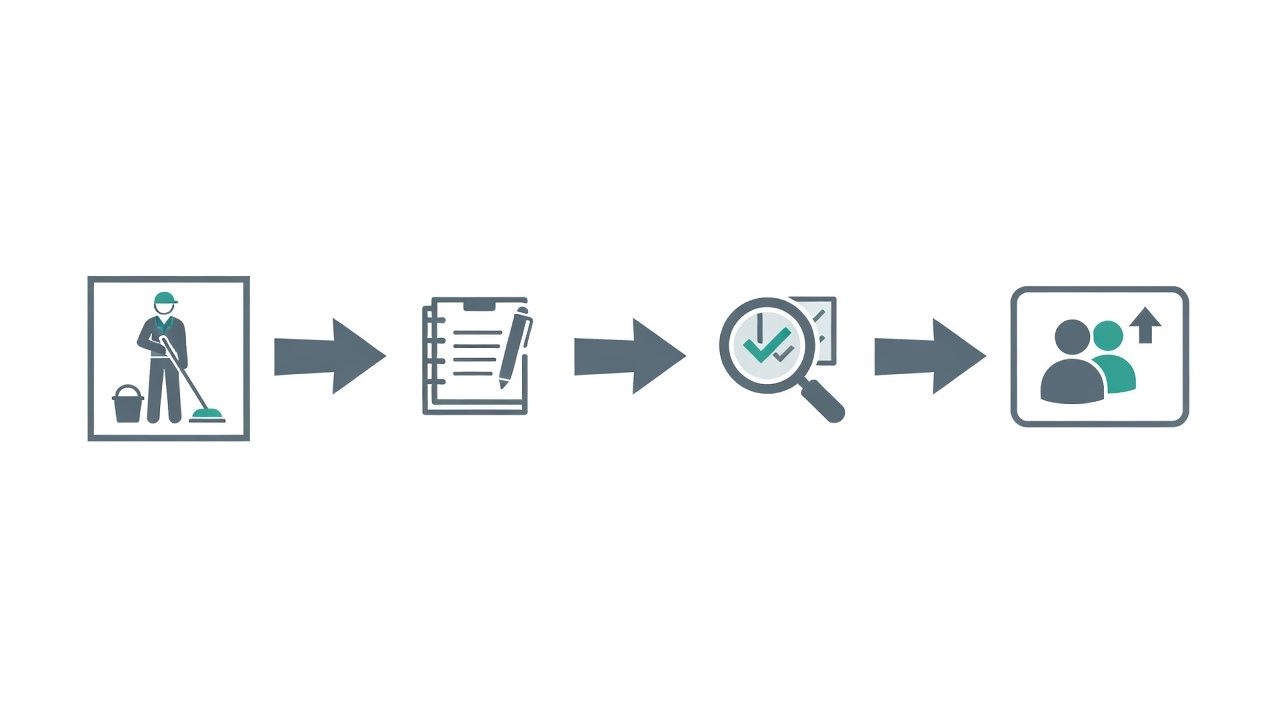
A short completion log and spot check help turn a cleaning schedule into a manageable control.
Common misconceptions about office cleaning schedules
“Every office needs the same daily checklist”
No. A low-occupancy office, a busy customer-facing workplace and an office with frequent food preparation have different cleaning demands. Use the zone-and-frequency framework as a starting point, then adjust it to actual use and condition.
“A signed checklist proves the cleaning is good”
It proves that someone recorded completion. It does not replace an inspection. Use exception notes and periodic spot checks to identify missed work, defects and tasks that need a different frequency.
“Employees should handle all office cleaning”
Staff can support hygiene by clearing personal desks, disposing of food correctly and reporting spills. Shared washrooms, kitchens, floors, waste and high-touch areas still need planned ownership and suitable cleaning methods.
“A cleaning schedule tells me how many hours I need”
Frequency and staffing time are related but separate decisions. The schedule defines the required scope; the size, layout, surfaces, condition and service model influence how that scope is delivered. Avoid hiding an incomplete task list inside an hours estimate. For further practical guidance, see how many cleaning hours your business needs rather than using a generic hourly assumption.
Using the schedule with a cleaning provider
Give every prospective provider the same zone-based scope and frequency list. Ask them to confirm what is included, what is periodic, who supplies consumables and how missed tasks are reported. This makes proposals easier to compare than asking only for a price or number of visits.
Urban Cleaning can help businesses review a practical cleaning scope for their premises. You can learn more about Urban Cleaning or ask about our office cleaning service in Bristol if you need the schedule delivered by a professional team.
The strongest office cleaning schedule is simple enough to use and specific enough to audit: zone, task, frequency, owner and sign-off. Trial the framework for a short review period, compare it with actual occupancy and condition, then revise the priorities. That turns a general checklist into a working part of facilities management.