
One Off Deep Cleaning vs Regular Cleaning in Bristol
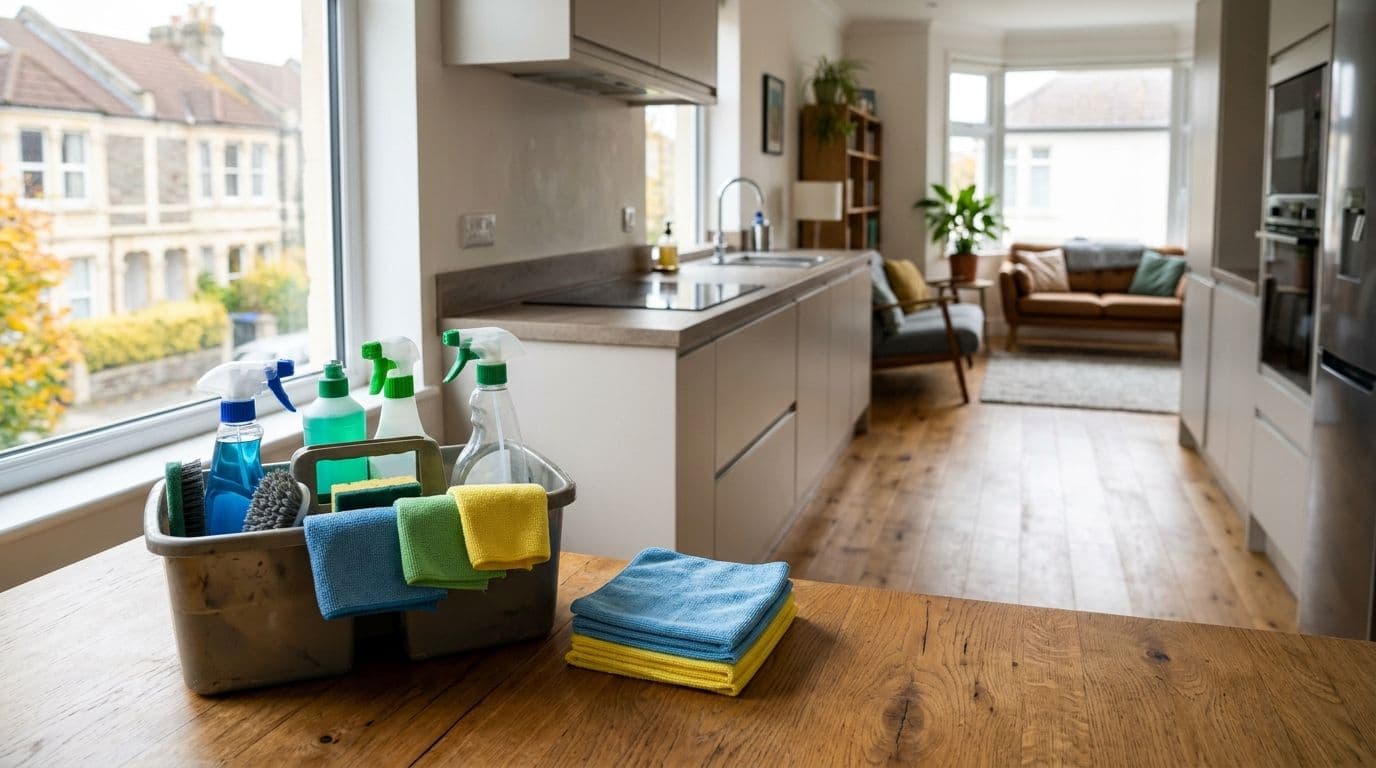
When choosing between one off deep cleaning and regular cleaning in Bristol, start with the reason for booking rather than the service label.
A one-off deep clean is usually suited to a defined reset: moving home, preparing for guests, catching up after a period of limited cleaning or dealing with dust after building work. Regular cleaning is intended to maintain commonly used areas through an ongoing arrangement.
Neither option is automatically better. The appropriate choice depends on the property’s current condition, who uses it, which areas matter most and whether the need is temporary or ongoing. The same principle applies in Bath, whether you are arranging cleaning for a household, a rental property or a workplace.
One-off deep cleaning and regular cleaning compared
| Decision point | One-off deep cleaning | Regular cleaning |
|---|---|---|
| Main purpose | Reset areas that need more detailed attention | Maintain an agreed level of day-to-day cleanliness |
| Pattern | A single planned visit or defined project | Recurring visits at an agreed frequency |
| Typical focus | Built-up grime, neglected areas and specific priorities | Frequently used rooms, surfaces and routine tasks |
| Best suited to | Moving, hosting, post-renovation dust or a backlog | Ongoing household or workplace upkeep |
| Main trade-off | More scope to plan and clarify for one visit | Requires a continuing arrangement and clear priorities |
A deep clean can be followed by regular cleaning, but there is no universal requirement to book both. A property that is already being maintained may need only regular visits. A move-related or event-specific need may call for one thorough visit without any ongoing service.
When one-off deep cleaning in Bristol makes sense
One-off deep cleaning is more appropriate when you have a particular reason to bring attention to the property as a whole or to selected areas. Common examples include:
- Moving into or out of a property: The property may need a defined clean between occupants or before furniture and belongings are brought in.
- Preparing for guests: You can prioritise the kitchen, bathrooms and living areas rather than arranging an ongoing routine.
- Recovering from a cleaning backlog: If routine chores have been difficult to keep up with, a one-off visit can address the areas that have been missed.
- After renovation or building work: Dust and residue may affect more than the rooms where work took place, so the required scope should be discussed in advance.
- Cleaning between occupants: Landlords, tenants and property managers may each have different priorities, so the purpose of the clean should be made clear.
The phrase “deep clean” does not mean that every provider includes exactly the same tasks. Depending on the agreed scope, priority areas may include skirting boards, door frames, radiators, accessible areas behind furniture, bathroom limescale, kitchen cupboards or the inside of an oven. Ask specifically about these items rather than assuming they are included.
If you are considering a residential reset, review Urban Cleaning’s residential deep cleaning service and identify the rooms or tasks that matter most before making an enquiry.
A Bristol example
A family in Bristol has completed a kitchen renovation. The immediate need is to deal with dust and grease before returning to its normal household routine. A one-off deep clean is likely to fit the situation better than beginning with regular maintenance, provided the requested areas and any appliance cleaning are agreed beforehand.
When regular cleaning is the better fit
Regular cleaning is designed for an ongoing need. It can suit a busy household that wants help maintaining kitchens, bathrooms and floors, or a workplace that needs agreed areas attended to as part of its routine.
The decision is influenced by factors such as:
- how many people use the property;
- whether children, pets or frequent visitors affect the cleaning routine;
- how heavily a workplace is occupied;
- which rooms or areas need attention most often;
- the preferred frequency of visits; and
- access arrangements and any areas that should remain restricted.
A regular visit will not necessarily cover the same tasks as a one-off deep clean. Routine cleaning generally focuses on accessible, frequently used areas. Detailed work inside appliances, behind furniture or on infrequently reached surfaces may need to be requested separately or planned as an occasional priority.
For a workplace, an office manager should also consider opening arrangements, working hours, restricted rooms and who will communicate changes. Regular cleaning can be discussed as part of an ongoing arrangement, while deeper work may be considered separately after a fit-out, room change or period of disruption.
A Bath example
A busy professional in Bath is already keeping the property in reasonable order but does not have enough time for regular household tasks. An ongoing cleaning arrangement may be more suitable than booking a deep clean whenever the home becomes difficult to manage. If particular areas such as the oven, skirting or behind furniture become priorities, those should be raised separately.
Which option should you choose?
Use these three questions to narrow down the decision.
1. What has prompted the clean?
If there is a specific event or change—such as moving, hosting guests, renovation work or a change of occupants—start by considering one-off deep cleaning. If there is no single event and the challenge is keeping up with everyday tasks, regular cleaning may be more appropriate.
2. Is the need temporary or ongoing?
A temporary need does not automatically justify a recurring arrangement. For example, a landlord arranging a clean between tenants may need a clearly defined one-off service. Conversely, a household remaining in the same home may benefit more from regular visits if cleaning is an ongoing difficulty.
3. Which areas and access arrangements matter most?
List the priority rooms and tasks before asking for a quote or arranging a visit. A home may need particular attention in the kitchen and bathrooms, while a business may need specific offices, shared areas or meeting rooms included. Explain any fragile items, confidential materials, restricted areas or access limitations.
The most useful comparison is therefore not simply “deep” against “regular”. It is the scope you need against the arrangement you want.
Combining a deep clean with regular cleaning
Some households and workplaces need both types of attention, but the sequence should reflect the property rather than follow a fixed rule.
A one-off deep clean followed by regular visits may make sense when:
- the property has accumulated dust or grime;
- routine cleaning has been difficult to maintain;
- you want to establish a clearer starting point for ongoing upkeep; or
- a workplace has changed after refurbishment or a move.
In other cases, regular cleaning alone may be enough, with occasional deeper tasks discussed when they become relevant. A one-off service can also remain the right choice when the need is tied to a single event and there is no reason to continue.
For example, a household in Bristol that has fallen behind may begin with one-off cleaning and then review whether recurring visits fit its lifestyle. A Bath workplace may use routine maintenance while arranging additional attention after changes to the space. Neither arrangement should be assumed without discussing the required areas and timing.
How to prepare for either service
Good preparation is mainly about making the scope and access clear.
Before a residential visit:
- Identify the rooms and surfaces that need priority attention.
- Explain why you are booking the clean, such as moving, guests, renovation dust or a backlog.
- Ask whether inside appliances, areas behind furniture, windows or other detailed tasks are included.
- Secure personal, fragile or valuable items where appropriate.
- Mention parking, keys, entry instructions or rooms that should not be accessed.
For a business or workplace:
- Confirm the areas to be cleaned and any areas that are restricted.
- Agree access arrangements and suitable working hours.
- Nominate a contact who can answer questions on the day.
- Explain changes to the premises, including a recent move, fit-out or altered room use.
- Confirm how additional priorities should be handled if they arise.
Do not assume that a one-off deep clean and a regular visit cover identical tasks. Ask what is included, what is excluded and whether additional work needs separate planning. If your requirements change, communicate them before the visit where possible.
Do you need a deep clean before regular cleaning?
No. There is no universal rule that a deep clean must come first. If the property is already in a suitable condition and your main aim is ongoing upkeep, you may be able to discuss regular cleaning directly.
A deep clean is worth considering first when the property has a substantial backlog, when you are changing occupants or when a specific event has created extra work. Regular cleaning is not intended to replace a discussion about occasional priorities such as post-renovation dust, inside appliances or hard-to-reach areas.
The right decision is based on the condition of the property and the scope you want—not on which service name sounds more comprehensive.
Making an enquiry in Bristol or Bath
Before contacting a cleaning provider, write down:
- the property type and location;
- whether you need a one-off or ongoing arrangement;
- the reason for the clean;
- priority rooms or workplace areas;
- any appliance, behind-furniture or other detailed requirements; and
- access restrictions or preferred timing.
For a residential one-off reset, you can start with the residential deep cleaning service. If you are unsure whether one-off deep cleaning or regular cleaning fits your situation—or you are arranging cleaning for a business—use the Urban Cleaning contact page to discuss the required scope.
Urban Cleaning Ltd serves Bristol and Bath. You can also call 0117 332 1241, Monday to Friday from 08:00 to 17:00.
The decision rule is straightforward: choose one-off deep cleaning for a defined reset or event, regular cleaning for ongoing upkeep, and discuss a combined arrangement when both needs apply.