
Questions to Ask Before Booking Sofa Cleaning in Bath
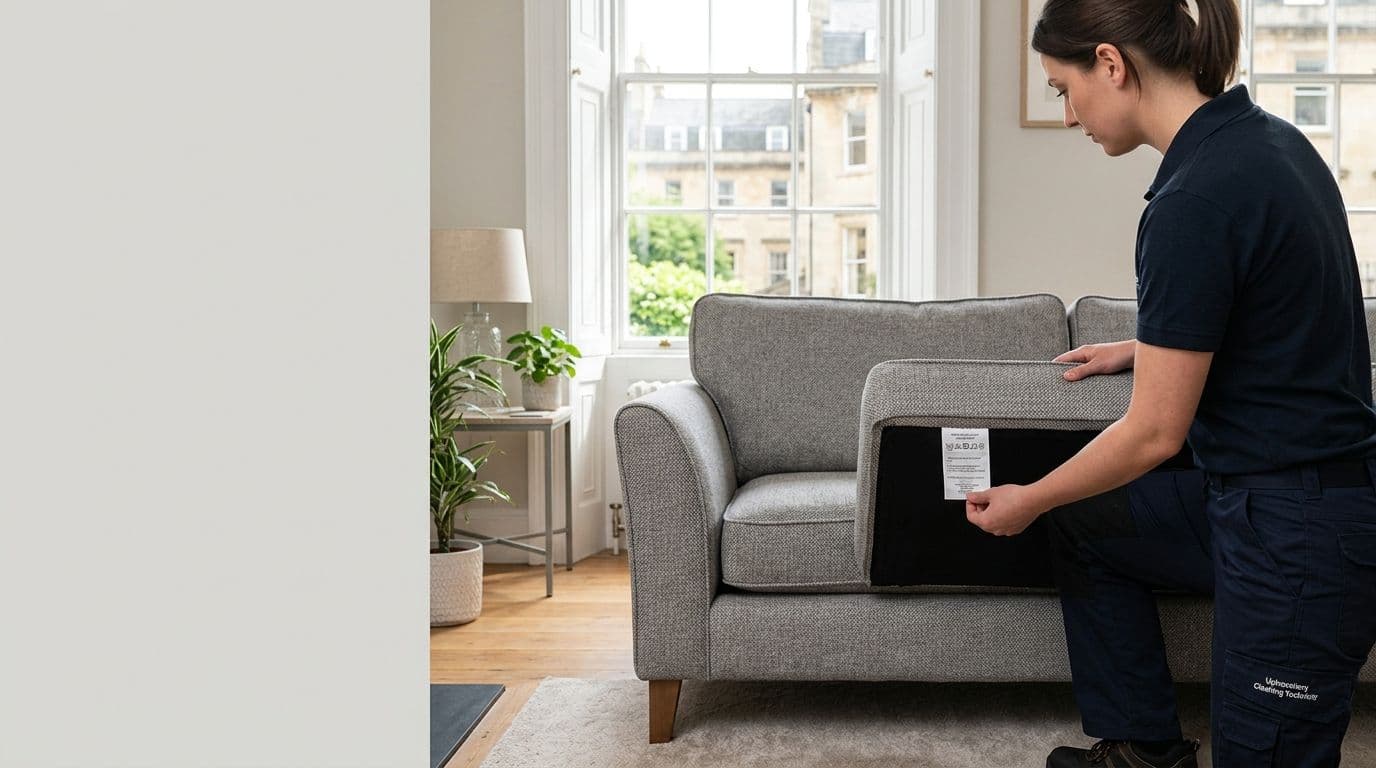
If you are searching for questions to ask before booking sofa cleaning in Bath, start with the details that determine whether the proposed service is suitable for your furniture. Ask how the fabric and condition will be assessed, what cleaning approach is recommended and why, exactly what the quotation covers, how to prepare the room, what occupants or workplace users need to know, and how concerns can be raised afterwards.
These questions matter whether you are arranging a clean for a family sofa in Bath or organising several seating areas for a small business in Bristol. A clear conversation before booking is more useful than relying on a broad promise that the same process will suit every sofa.
1. Will you check the fabric and condition first?
Ask:
“Will you inspect the care label, fabric type and condition before cleaning?”
Upholstery can vary considerably, even between sofas that look similar. The care label may use codes such as W, S, WS or X. These are useful prompts for discussing whether water-based products, solvent-based products or no liquid treatment are appropriate, but the label should not replace an assessment of the actual sofa.
A provider should also be told about:
- Previous professional or DIY cleaning
- Delicate, worn or faded areas
- Loose stitching, exposed filling or damaged trim
- Heavy soiling, stains or odours
- Any colour-transfer concerns
- Removable cushions and matching chairs
If a sofa has no label, say so when you enquire. The absence of a care label does not automatically mean that cleaning is impossible, but it does make a proper assessment particularly important.
A useful answer should explain what will be checked before any treatment is proposed. Be cautious of a response that treats every fabric and every condition in exactly the same way.
2. What approach do you recommend for this sofa, and why?
Once the fabric and condition have been discussed, ask:
“What cleaning approach do you recommend for this fabric, and why?”
The answer should connect the proposed approach to the sofa in front of you. It should not simply describe one universal method for all upholstery.
For example, a labelled fabric sofa with ordinary household soiling may raise different questions from a delicate sofa with worn arms, a previous water mark or a surface that has already been treated with a retail product. A small workplace with several different seating types may need each item assessed separately rather than being booked as one generic “sofa clean”.
You can also ask whether any areas should be left untreated because of their condition. That is a practical question, not a sign that you are expecting a poor outcome. Some parts of a sofa may need a different approach, further discussion or no treatment at all.
Common misconception: a care code is a complete cleaning plan
Care codes are helpful, but they do not describe every risk. Cushion construction, trims, backing materials, dyes and existing damage can all affect the decision. A W code does not mean that a sofa can automatically be saturated, and an X code should not be treated as an invitation to experiment with liquid products at home.
Keep a photograph of the label ready when making an enquiry, and point out any area that concerns you. This gives the provider more useful information before the appointment is agreed.
3. What exactly is included in the quotation?
Ask:
“Does the quoted work include the cushions, arms, back, sides and any stain treatment, or are there extras?”
“Sofa cleaning” can mean different things to different people. Before booking, define the furniture and the areas you want considered. Clarify whether the scope includes:
- Removable seat and back cushions
- Fixed cushions
- The front, sides and back of the sofa
- Arms, piping and other upholstered details
- Matching chairs, footstools or another sofa
- Stain treatment or odour-related work
- Any areas that are difficult to access
Do not assume that a stain or odour can be removed simply because it has been mentioned. Ask how it will be assessed and whether any additional work would be discussed before it is carried out.
For a household, writing down the number of sofas, chairs and removable cushions will make the enquiry clearer. For a business, list each room, reception area or seating group separately. This helps prevent a vague description from becoming an unclear appointment.
Ask what could change the scope after inspection. If extra work is suggested, you should be able to decide whether to proceed before it is undertaken.
For related upholstery requirements, you can review Urban Cleaning’s carpet and upholstery cleaning service and confirm the intended scope before booking.
4. How should you prepare the room and sofa?
Ask:
“How should I prepare the room and sofa before you arrive?”
The answer may depend on the furniture and the property, but common points to clarify include:
- Whether personal items should be removed from the sofa
- How much floor space needs to be clear nearby
- Whether small furniture should be moved in advance
- Which items the technician should not move
- Whether cushions need to be separated or left in place
- How the room should be managed after the work
Tell the provider about access issues early. Stairs, narrow entrances, parking arrangements, awkward corridors and restricted workplace access may all affect the appointment. Do not assume that a provider can accommodate a particular arrangement without discussing it.
For a home, mention children, pets and furniture placement. For a workplace, discuss opening hours, staff access, visitor arrangements and whether the seating needs to be available at a particular time. Ask what needs to remain accessible during the visit and what instructions should be followed afterwards, including any advice about using the room again.
A short preparation note can prevent misunderstandings. Include the property area, number of sofas, access restrictions and any furniture that must remain in place.
5. Are there household or workplace considerations to discuss?
Ask:
“What information do you need about children, pets, allergies or other people using the room?”
If children, pets, vulnerable occupants or anyone with sensitivities regularly uses the space, disclose that before booking. Ask what information is available about the proposed products or treatments and what the provider recommends for your particular room and occupants.
Avoid treating a general statement such as “suitable for everyone” as a complete answer. Ask what instructions apply to your household, including any arrangements for children or pets returning to the room.
Businesses should consider staff and visitors as well as the person arranging the booking. If there are building-access requirements or instructions that need to be shared with staff, raise these before the appointment. The aim is to agree practical arrangements, not to assume that a general household answer will cover a workplace setting.
6. What happens if the fabric is unsuitable or you have concerns?
Before booking, ask two separate questions:
“What happens if inspection shows that a fabric or damaged area is unsuitable for the proposed approach?”
“How should I raise a concern after the visit?”
The first question clarifies whether the work will be reconsidered if the sofa is different from the initial description. It is especially relevant where the care label is missing, the fabric is delicate or damage is already visible.
The second establishes who should receive your feedback and how it should be handled. Look for a clear communication process rather than relying on a broad phrase such as “we stand behind our work”. No provider can make every mark, odour or existing defect disappear, so it is sensible to discuss expectations and limitations before the appointment.
Keep the booking information in one message or document. It should record the sofa description, requested areas, access details, preparation requirements, household or workplace considerations and any questions still awaiting an answer.
A copy-and-paste checklist for your enquiry
Use this list when contacting a sofa cleaning provider in Bath or Bristol:
- Will you check the care label, fabric and existing condition first?
- What approach do you recommend for this sofa, and why?
- Have you considered previous cleaning, stains, odours or delicate areas?
- Does the quotation include all cushions, arms, sides and backs?
- Are stain treatment or other additional requests handled separately?
- What could change the scope after inspection?
- How should I prepare the room and sofa?
- Are there access, parking or workplace scheduling details to discuss?
- What information do you need about children, pets, allergies, staff or visitors?
- What should happen if the fabric is unsuitable for the proposed approach?
- Who should I contact if I have a concern after the visit?
If you are arranging both upholstery and carpet work, you can also review Urban Cleaning’s carpet cleaning service for Bristol and Bath and confirm whether the services should be discussed together.
Making the booking decision
The most useful answer to these questions is not necessarily the longest one. It is an answer that shows the provider has understood the specific sofa, clearly defines the work and explains what needs to happen before and after the appointment.
Before confirming, check that the fabric and condition have been discussed, the scope is written down, access and preparation are understood, occupant or workplace requirements have been disclosed, and the follow-up route is clear.
To discuss your requirements with Urban Cleaning Ltd, which serves Bath and Bristol, visit the contact page or call 0117 332 1241. Urban Cleaning Ltd is open Monday to Friday from 08:00 to 17:00.