
How to Get Red Wine Out of Carpet: Fresh and Dried Stains
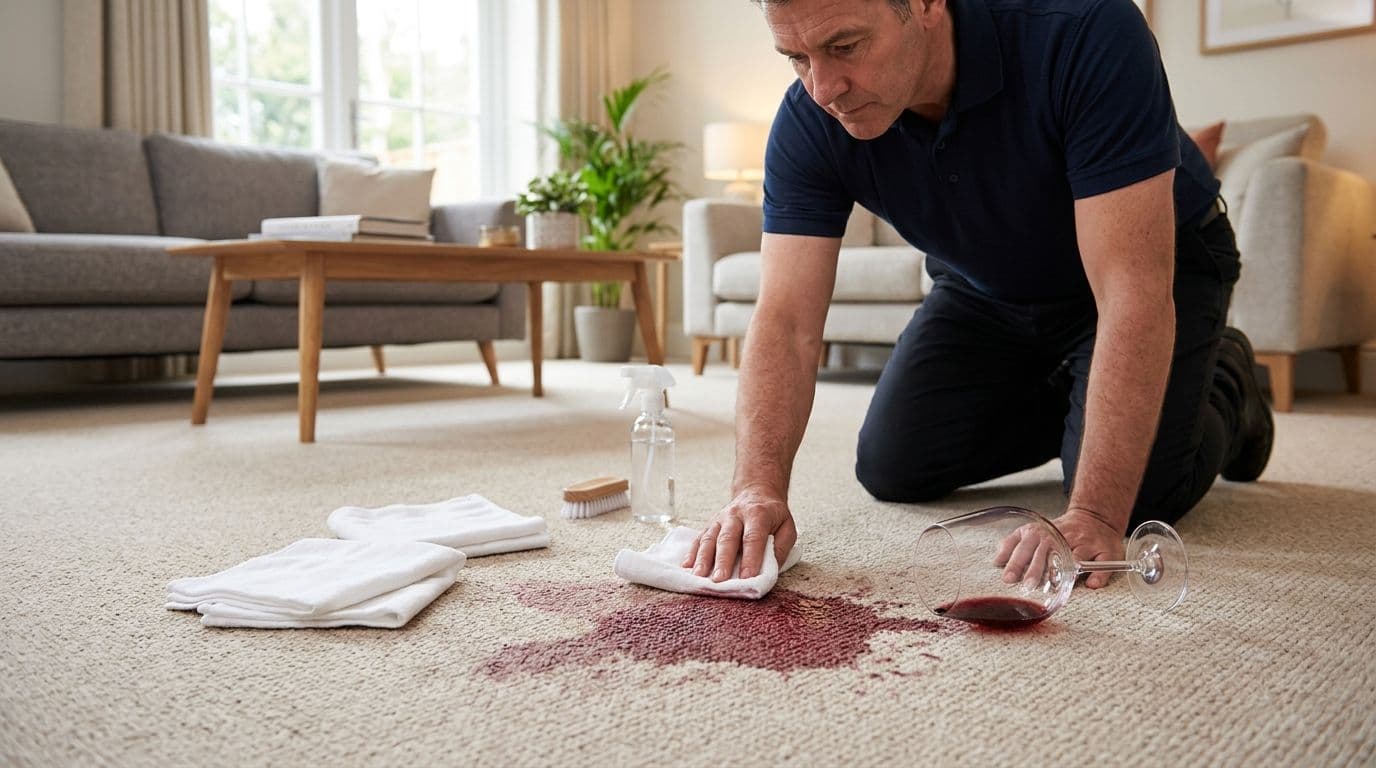
A red wine spill needs a calm, controlled response. The aim is to lift the liquid from the carpet rather than spread it through the pile. How well the mark responds can depend on the carpet’s fibre, colour, pile and how long the wine has been present.
The steps below are suitable for a small fresh spill on a domestic carpet or a light commercial area. If the mark is large, dried, persistent or on a delicate or valuable carpet, stop before repeated treatment causes further change.
Prepare the area and materials
Before treating the stain:
- Keep people and pets away from the spill.
- Move nearby items that could be damaged or knocked into the wet area.
- Gather clean white or colourfast cloths, cool water, a small container and a small amount of washing-up liquid.
- Keep salt or bicarbonate of soda available only as optional materials if colour remains; neither should be treated as a guaranteed solution.
- Check the carpet manufacturer’s care information if it is available.
- Test any cleaning mixture on an inconspicuous area first. Stop if colour transfers to the cloth or the carpet’s appearance changes.
For a home, this might mean isolating the living-room carpet after a dinner party. In an office, hallway, hospitality setting or rental property, record where the spill is and who is responsible for completing the treatment before starting.
How to get red wine out of carpet: fresh spill steps
1. Blot the spill immediately
Place a clean cloth over the wet area and press gently. Work from the outside edge towards the centre so the mark does not spread. Lift the cloth, refold it or replace it as it becomes marked.
Do not scrub. Rubbing can push wine further into the carpet pile and enlarge the affected area.
2. Apply a mild washing-up liquid solution
Add a small amount of washing-up liquid to cool water. Dampen a clean cloth with the diluted solution rather than pouring it directly onto the carpet.
Dab or press the cloth onto the mark, working from the edge towards the centre. Use only enough liquid to work on the affected area; saturating the carpet can spread the stain and make residue harder to remove.
3. Blot again with a clean cloth
Continue pressing with clean sections of cloth to lift the wine and cleaning solution. Replace the cloth when it becomes visibly marked. Patience is more useful than force at this stage.
4. Rinse sparingly
Use a fresh cloth dampened with a small amount of cool water to lift washing-up liquid residue. Follow with another dry cloth and blot until the area no longer feels obviously soapy.
Avoid flooding the carpet. Excess water can spread the mark beyond the original spill.
5. Reassess before trying anything else
Look at the area in normal room lighting. If a pink or purple colour remains, an optional light application of salt or bicarbonate of soda may be considered, provided the carpet’s care information allows it and a hidden-area test has caused no change. Treat these as cautious options, not as a promise that the stain will disappear.
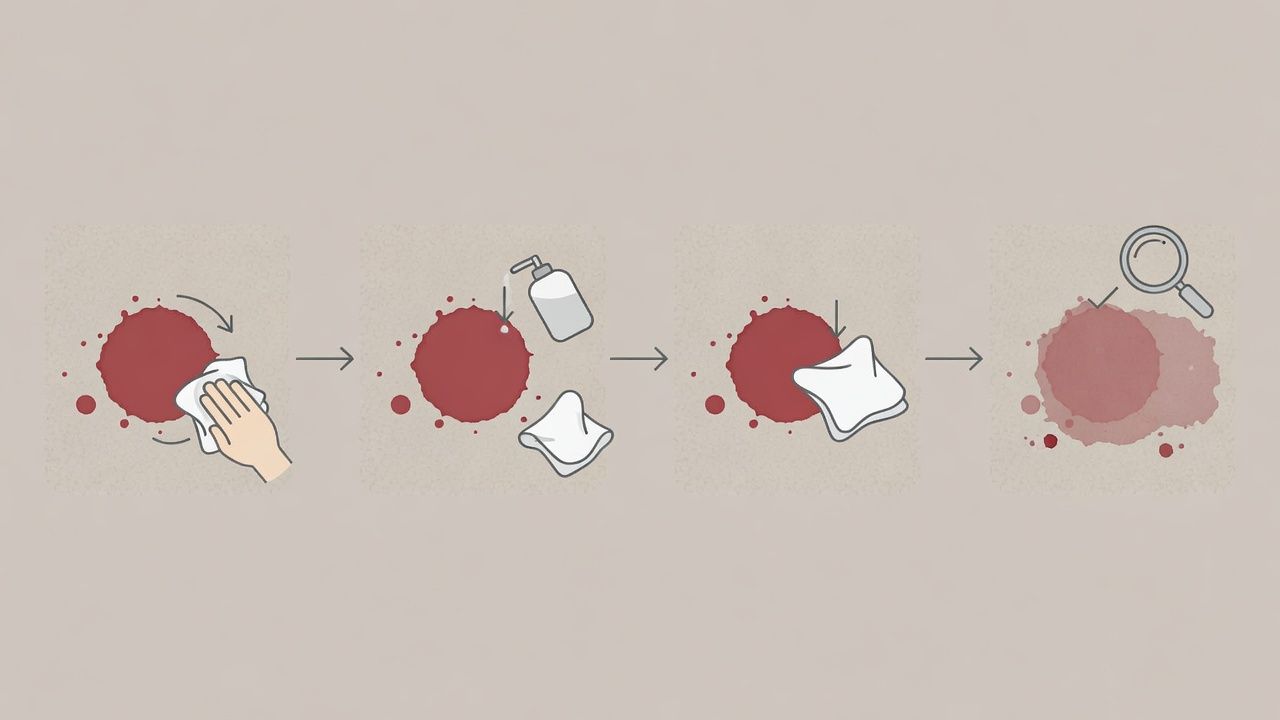
Treat the spill in stages and blot between each step rather than scrubbing.
A fresh spill may look significantly lighter after careful blotting without disappearing completely. This is particularly noticeable on white or light-coloured carpet, where a faint pink or purple residue can remain visible.
Treating a dried red wine mark
A mark discovered the next morning needs a more cautious approach. First remove any loose debris from the area. Then gently re-wet the mark with a small amount of cool water or mild washing-up liquid solution on a cloth.
Blot repeatedly, working from the outside towards the centre. Reassess after each round instead of repeatedly adding liquid. Avoid forceful rubbing, which may spread the mark or disturb the carpet pile.
For example, a purple mark in an office hallway may improve with controlled re-wetting and blotting but still remain visible. If it covers a broad area, sits on light or delicate carpet, or does not respond to careful treatment, professional assessment is the more sensible next step.
Troubleshooting: what to do when treatment is not going well
The mark is spreading
Stop adding liquid. Return to controlled edge-to-centre blotting with a clean cloth. Work around the outer edge first and use fresh cloth sections so the wine is not transferred back to the carpet.
The carpet feels soapy
Use small amounts of cool water on a clean cloth to lift the residue, then blot. Do not pour water over the area or continue adding cleaning products.
Colour transfers from the carpet
Stop treatment immediately. This indicates that the mixture may not be suitable for that carpet, so further DIY work could alter its appearance.
A pink or purple shadow remains
Do not keep scrubbing in an attempt to remove the last trace. Check the area under normal lighting and consider professional carpet cleaning, especially for light carpet or a mark that has dried.
You are unsure what the carpet is made from
Avoid experimenting with several products. If you cannot identify the fibre or care requirements, professional advice can reduce the risk of making the area harder to treat.
The spill is in a busy workplace or commercial area
Keep people away from the affected section, note the location and avoid repeated treatment during busy use. A larger spill or a prominent hallway mark may be better handled by arranging professional help sooner.
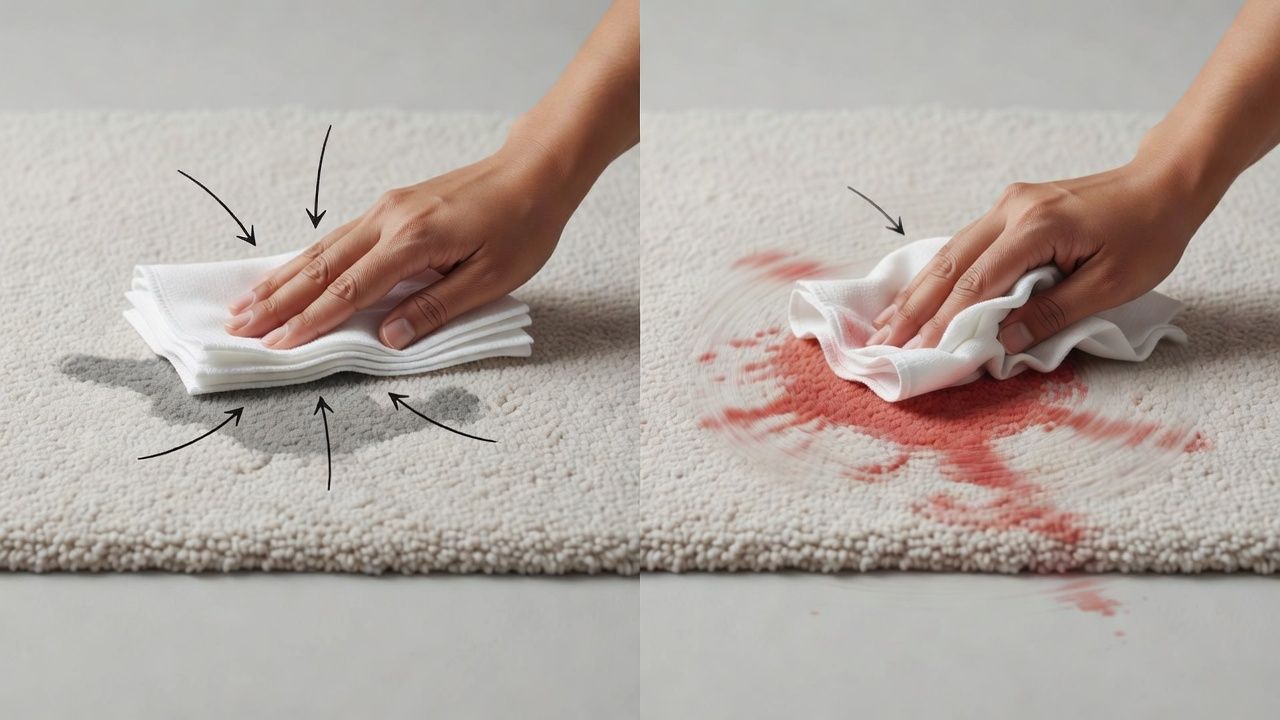
Controlled blotting helps avoid spreading the spill; aggressive rubbing can make treatment harder.
When to stop DIY treatment
DIY treatment is most reasonable when the spill is small, fresh and responding to careful blotting without spreading or changing the carpet. Stop and consider professional carpet cleaning when:
- the mark remains clearly visible after cautious treatment;
- the spill is large or has spread into the pile;
- the carpet is white, light-coloured, patterned, delicate or valuable;
- colour transfers during testing;
- the carpet feels coated with cleaning residue; or
- you are uncertain about the fibre or suitable products.
For households and businesses in Bristol and Bath, you can review Urban Cleaning’s carpet cleaning service in Bristol before deciding how to proceed. Urban Cleaning Ltd serves Bristol and Bath. If you arrange a visit, remove loose items and identify the affected areas first; the guide on how to prepare for a professional carpet clean covers broader preparation.
For questions about the next step, use the Urban Cleaning contact page. Avoid assuming that a particular treatment will be suitable or that a persistent stain can be removed completely.
Completion check
Before you consider the treatment finished, inspect the area under the room’s normal lighting and check for:
- remaining pink or purple colour;
- a visible tide mark around the treated section;
- sticky or soapy residue;
- spreading beyond the original spill; and
- a changed or disturbed carpet pile.
The area is ready to leave undisturbed when it looks acceptably clean for its setting, shows no obvious cleaning residue or spreading, and the carpet’s appearance has not changed. If the mark remains visible, the carpet has changed, or you are unsure about what you are seeing, stop treating it and seek professional guidance rather than repeatedly applying more liquid or scrubbing harder.