
How to Prepare for a House Deep Clean in Bath
By Urban Cleaning8 min read
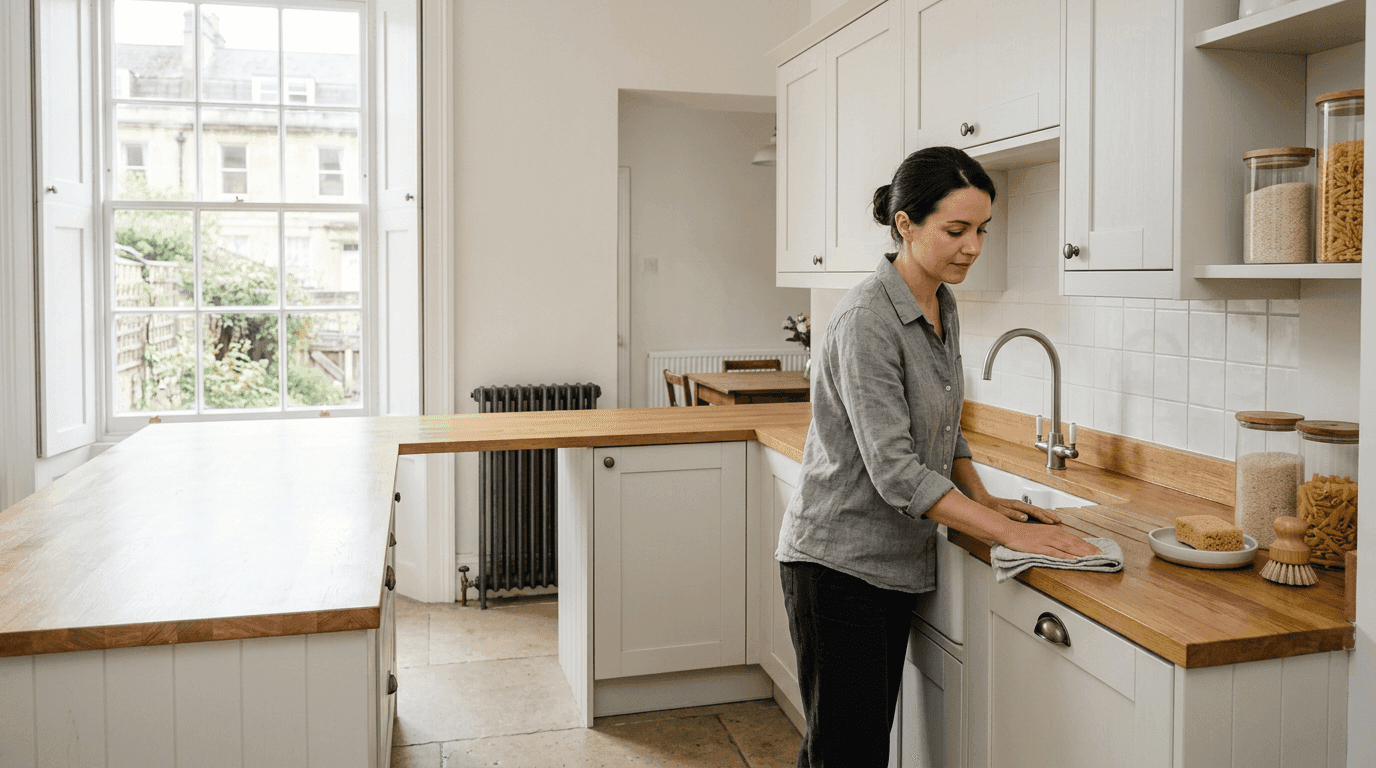
The best way to prepare for a house deep clean in Bath is to tidy strategically, not to deep-clean the property yourself. Clear floors, worktops and other surfaces; secure valuables and fragile belongings; arrange pets and access; then leave a short note explaining which areas matter most.
This preparation removes obstacles so a professional cleaner can concentrate on detailed work rather than moving everyday items. It is particularly useful in homes with compact rooms, narrow hallways, period features or several storeys, where access may need a little more thought.
If you are ready to arrange the service, see Urban Cleaning’s residential deep cleaning service. The same preparation is useful for households, landlords and tenants in Bath and Bristol, as well as small businesses with domestic-style premises.
What to do before the deep clean
Think of preparation as creating clear working areas. You do not need to scrub the oven, descale the bathroom or vacuum every corner beforehand. Instead:
- Remove loose items from floors, stairs and hallways.
- Clear worktops, tables, shelves and bathroom surfaces where possible.
- Put away paperwork, jewellery, cash, medication and other personal items.
- Box fragile ornaments, antiques and delicate objects, rather than leaving them for the cleaner to work around.
- Decide where pets and children will stay during the visit.
- Confirm how the property will be accessed and which rooms are included.
- Write down your main priorities, such as a shower screen, oven exterior or skirting boards.
This distinction matters. A deep clean is intended to address built-up dirt and overlooked areas, while your preparation should simply make those areas reachable. Spending your time on a quick declutter is usually more useful than repeating the cleaning work that you are booking professionally.
A room-by-room preparation guide
Hallways, stairs and floors
Clear shoes, toys, laundry baskets, bags and cables from walkways. Move small furniture or loose items if doing so is safe and practical. A clear route from the entrance to the main rooms makes it easier to bring cleaning equipment into the property and helps edges, corners and floor areas remain accessible.
For a flat or a terraced home, mention any awkward entrance, tight staircase or access restriction before the appointment. Do not assume that a cleaner will know where parking, communal doors or difficult stairs are located.
Bedrooms
Remove clothing, chargers, books and other loose belongings from the floor. Clear bedside tables and other surfaces that you want cleaned. If changing bed linen is part of the agreed service, ask what is included and place a clean set of linen on the mattress if requested.
Keep important documents, jewellery and personal items somewhere secure. If a room contains delicate furniture or period features, point them out in advance rather than expecting the cleaning team to identify special requirements on arrival.
Living and dining rooms
Put mail piles, ornaments, chargers, toys and small decorative items into a basket, box or their usual storage place. This exposes tables, shelves and other surfaces without turning the preparation into a full house reorganisation.
Leave anything that should not be moved in a clearly agreed location, or mention it in your instructions. For example, you may want a particular display, paperwork pile or work area left untouched.
Kitchen
Clear small items from worktops, tables and the sink area. Put away food, loose utensils, mail, chargers and ornaments. If you want the inside of a cupboard, drawer or appliance cleaned, empty that particular area and identify it clearly.
Make a note of your priorities. You might want attention given to the oven exterior, splashback, cupboard fronts, sink area or visible build-up around taps. The purpose of the note is to communicate what matters most; it is not an instruction to attempt specialist cleaning yourself before the visit.
If additional appliance or carpet work is important, ask about the scope when requesting a quote. Confirming this beforehand is more useful than assuming every extra task is automatically part of a standard residential deep clean.
Bathrooms and ensuites
Put toiletries, make-up, small bottles, towels and loose items into a basket or cupboard. Clearing the basin, bath edge, shower area and shelves allows the surfaces and fittings to be reached more easily.
Flag concerns such as a shower screen, taps, chrome or visible limescale in your priority note. Homes in Bath and Bristol can include compact bathrooms where a few bottles and baskets take up a significant amount of usable surface, so even a small clear-out can make the working area more accessible.
Do not buy particular products or apply aggressive treatments simply to prepare for the visit. If a surface is natural stone, delicate, painted, antique or otherwise unusual, mention it before cleaning so the scope and handling requirements can be discussed.
Protect belongings and plan for pets
Move fragile ornaments, antiques and other delicate items to a secure box or a safe room. Store valuables and private paperwork out of the cleaning area. This prevents uncertainty about whether an item should be moved and reduces the risk of it becoming an obstacle.
Pets should be placed in a comfortable room away from active cleaning areas, or cared for elsewhere during the appointment. This is helpful when doors need to remain open, people are moving between rooms or equipment is being used. Tell the cleaning team about any room that must remain closed or any access limitation involving a pet.
Children should also have a safe area away from the work zones. Keep cleaning products and equipment out of reach during the visit, and follow any instructions provided about when rooms can be used again.
Confirm access and explain your priorities
Before the appointment, confirm:
- How the cleaner will enter if you will not be at home.
- Where to park or how to reach the property entrance.
- Which rooms and specific areas are included.
- Whether water and electricity will be available if they are needed for the agreed work.
- Which rooms, possessions or surfaces must not be touched.
- Which two or three issues should take priority if everything cannot be addressed in the same order.
A short written note can be enough. For example:
Please prioritise the shower screen, the oven exterior and the skirting boards in the hall. Leave the study desk and the display cabinet untouched. The cat will be in the spare room.
For a landlord or tenant, explain whether the property is occupied, recently vacated or being prepared for a change of tenancy. A deep clean may be relevant in each situation, but the rooms, fixtures and access requirements can differ. If the visit is connected with an end-of-tenancy handover, check which areas matter most before booking rather than treating this preparation list as a complete inventory inspection.
Small businesses using domestic-style premises can apply the same approach: clear access, secure paperwork and personal belongings, identify restricted areas and state the priority surfaces. Commercial kitchens and specialist commercial premises require a separate discussion about scope.
Local considerations for Bath and Bristol homes
Some local properties have features that deserve advance discussion rather than assumptions. These may include period details, compact terraced layouts, flats with communal access, narrow staircases or bathrooms where hard-water deposits are visible on taps and screens.
You do not need to diagnose a surface or promise that a mark will disappear. Simply describe what you can see and ask whether it is within the agreed scope. This gives Urban Cleaning a clearer understanding of the property before the appointment and helps separate ordinary preparation from specialist or additional work.
For homes with several floors, identify the rooms to be cleaned and any areas that are difficult to reach. For flats, provide practical entry information through the agreed contact route without leaving sensitive security details in an exposed note.
Final checklist before the cleaner arrives
Use this quick walk-through on the day before or the morning of the visit:
- Floors, stairs and hallways are free from shoes, toys, bags and cables.
- Worktops, tables, shelves and bathroom surfaces are as clear as practical.
- Cupboards, drawers or appliances requiring internal cleaning are emptied.
- Valuables, private papers and fragile items are stored safely.
- Pets and children have a safe arrangement away from the work areas.
- Rooms that should not be entered or items that should not be moved are identified.
- Your priority areas are written down.
- Entry, parking and room access have been confirmed.
The common misconception is that the house must already be spotless before a deep clean. It does not. The useful preparation is a tidy, secure and accessible home with clear instructions. If you have spent your time scrubbing every room, you may simply be doing the booked work twice.
Arrange a residential deep clean in Bath
Urban Cleaning Ltd serves Bath and Bristol. To discuss the scope of a residential deep clean, use the residential deep cleaning service page or contact Urban Cleaning. You can also call 0117 332 1241, Monday to Friday from 08:00 to 17:00.
Have your room list, access details and priority areas ready. That is enough to start a practical conversation about preparing your home for the visit.