
Office Cleaning Checklist for Bristol and Bath Workspaces
By Urban Cleaning7 min read
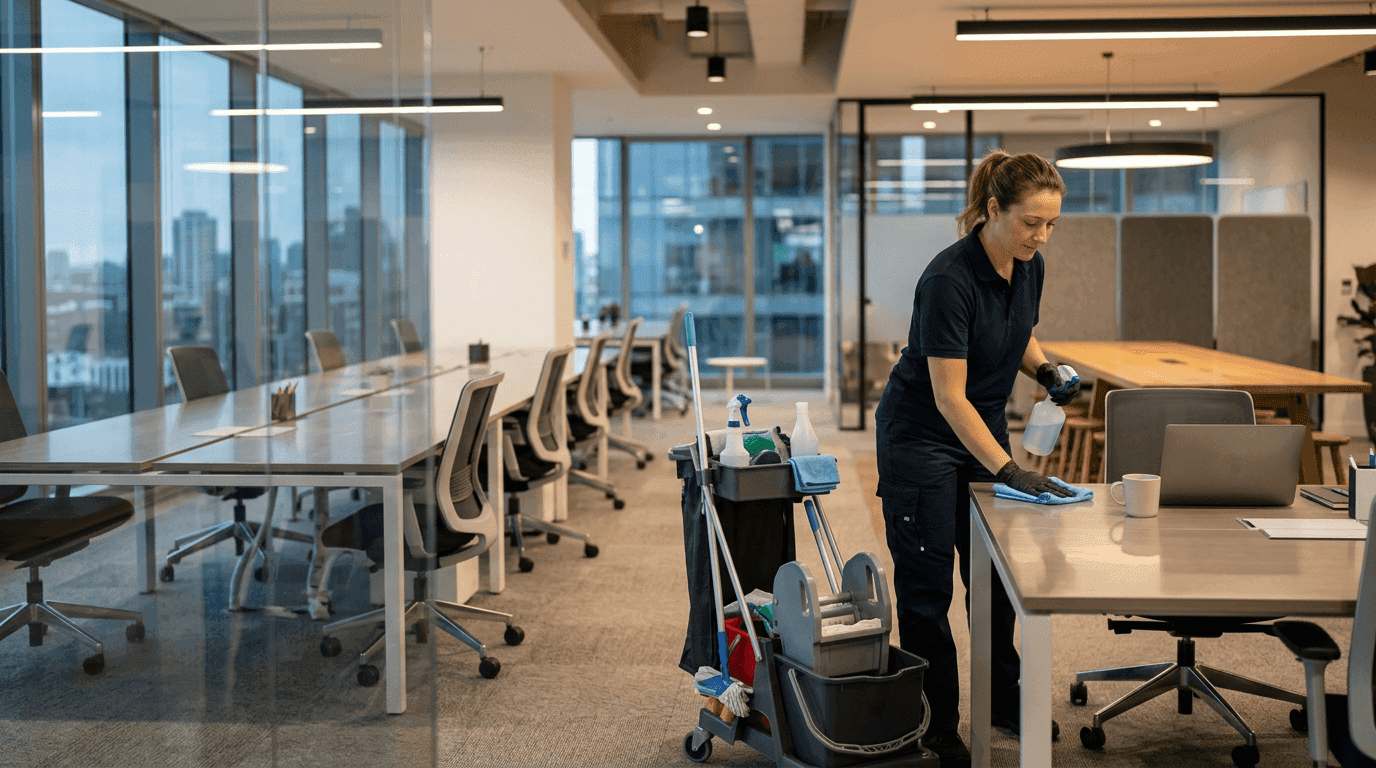
A useful office cleaning checklist turns a general instruction such as “clean the office” into clear tasks, responsibilities and a completion check. It can help a small office manager, a home-based worker or a larger workplace prepare the space and brief a cleaner clearly.
The right list depends on how the space is used. A busy shared office may need daily attention to workstations, kitchen areas, washrooms and traffic routes. A home-based workspace may only need the desk, phone, door handle, floor and bin included in the work brief.
Use the steps below to create a practical routine for a workplace in Bristol or Bath.
1. Set the scope before cleaning starts
First, identify every area that belongs on the checklist. Consider:
- Workstations and desks
- Shared surfaces and touchpoints
- Meeting rooms
- Kitchen or break room
- Washrooms
- Carpets and hard floors
- Bins and other waste points
- Shared storage or less-used areas
Then decide which tasks should be completed daily and which should be reviewed weekly. Base this on how often each area is used rather than applying the same frequency everywhere.
Before a scheduled clean:
- Clear personal items from desks and shared surfaces.
- Note any spillages, marks or problem areas for the cleaning team.
- Confirm who will provide access.
- Identify rooms or cupboards that should not be entered.
- Decide how completed tasks and exceptions will be recorded.
For example, a home-based workspace might include a desk, phone, door handle, floor and bin. A shared office would usually need additional checks for the kitchen, washroom, meeting rooms and communal touchpoints.
If you are arranging professional help, be specific about the areas included and excluded. Urban Cleaning Ltd serves Bristol and Bath, and you can use the office cleaning service page to compare your requirements with the service information available.
2. Work through the daily office cleaning checklist
Use a consistent order so that tasks are easy to follow and omissions are easier to spot. A practical sequence is waste first, then surfaces, kitchen and washroom areas, followed by relevant floor care.
Remove waste and prepare the rooms
- Empty and reline bins.
- Check waste points in kitchens, meeting rooms and washrooms.
- Look for spillages or items that could obstruct cleaning.
- Record anything that cannot be addressed during the visit.
Clean desks and high-touch points
Wipe the surfaces included in the agreed scope, giving particular attention to:
- Desks and shared worktops
- Phones and keyboards
- Door handles
- Meeting-room tables and chair arms
- Frequently used switches or fittings
Personal items can prevent a desk from being cleaned properly. If an area remains covered, record it rather than marking the task as complete.
Clean the kitchen or break room
Check the areas used during the working day, including:
- Sink
- Worktops
- Microwave
- Shared appliances
- Food preparation areas
- Floor
- Kitchen waste point
Clean and disinfect the sink, worktops and microwave where these tasks form part of the agreed brief. If the fridge is included, make that a separate task so it is not overlooked.
Check the washroom
Include the relevant washroom tasks in the daily list:
- Clean the visible surfaces and fittings within scope.
- Check toilet paper, hand soap and towels.
- Record low supplies and clarify who is responsible for restocking.
- Empty the washroom bin.
Finish the floors
Vacuum carpets and mop hard floors in traffic areas where those tasks are included. Pay attention to entrances, kitchen routes and areas around desks or meeting rooms.
After a busy day, for example, you might record a spill near the kitchen, clear items from a desk, empty the nearest bin, clean the affected surface and then check the floor. This sequence makes the immediate problem visible instead of relying on a general instruction to clean the room.
For help turning these tasks into a service brief, see the office cleaning service for Bristol.
3. Add a weekly review for less frequent tasks
The weekly section should cover areas that daily cleaning may not fully address. It is a review rather than a fixed rule: adjust it when the way the workplace is used changes.
Include checks such as:
- Dust shelves, skirting boards and light fittings.
- Review less-used corners and shared storage areas.
- Inspect meeting rooms for marks on tables, chairs, doors or fittings.
- Clean kitchen and break-room areas beyond the immediate daily wipe-down, including sinks, counters, appliances, fridges and floors where included.
- Check floor edges and regularly used traffic routes.
- Add recurring problem areas to the daily or weekly brief according to how often they occur.
A meeting room used frequently may need its table, chairs, door handles and floor checked every week. A rarely used room may need a different arrangement. The important point is to name the room and tasks rather than relying on “deep clean office” as an unclear instruction.
For a wider way to organise recurring tasks, use this office cleaning schedule guide.
4. Adapt the checklist to the type of workspace
Small office
Prioritise workstations, shared touchpoints, waste, the kitchen or break room, the washroom and traffic-area floors. List the rooms by name if there is more than one office or meeting room.
Home-based workspace
Separate work-related cleaning from general household cleaning. State whether the brief covers only the office, or also shared rooms such as a kitchen, hallway or washroom. This avoids assumptions about what is included.
Larger or shared office
List each room separately and identify any areas that are excluded. Include access details, preferred visit pattern, supply-restocking responsibilities and places requiring special attention.
A clear brief might say:
Desk surfaces, phones, door handles, bins, kitchen, washroom and traffic-area floors.
That is more useful than asking for “a general clean”. If you want to discuss the scope for a Bristol or Bath workspace, you can contact Urban Cleaning.
5. Troubleshoot incomplete or recurring tasks
A checklist is most useful when it explains what needs attention next. Use these adjustments when the routine is not working as expected.
A task is repeatedly missed
Name the exact room, surface or item instead of rewriting the whole checklist. Replace “clean kitchen” with separate checks for the sink, worktops, microwave, fridge, floor and waste point.
Desks cannot be cleaned
Record that personal items obstructed the surface and ask for the area to be cleared before the next scheduled visit. Do not mark the desk task complete if the surface was inaccessible.
A spill or problem area is found
Write down its location and add it to the cleaning brief. For example, record “spill beside the kitchen entrance” rather than “check floors”. This makes the follow-up specific.
Supplies are low
Record the item separately, such as toilet paper, hand soap or towels. Clarify whether the cleaner, office manager or household is responsible for restocking.
The same floor area needs attention repeatedly
Add that area to the daily or weekly review according to how often the space is used. Identify the route or room so it can be checked consistently.
6. Complete the final check
Before closing the visit, compare the completed list with the agreed scope. Mark a task complete only after it has been checked.
Use this completion check:
- Rooms covered
- Waste emptied and bins relined
- Desks and shared surfaces addressed
- High-touch points reviewed
- Kitchen checked
- Washroom surfaces and supplies checked
- Relevant carpets vacuumed and hard floors mopped
- Required supplies restocked, or shortages recorded
- Spillages, inaccessible areas and problem spots noted
- Follow-up actions clearly assigned
The expected result is not simply a ticked sheet. You should have a record showing which rooms were covered, which tasks were completed and which exceptions need action. If something was not completed, leave an explanatory note rather than presenting the checklist as finished.
Keep the checklist specific to the space, update it when how the area is used changes and share exceptions clearly. To discuss office cleaning in Bristol or Bath, contact Urban Cleaning Ltd through the contact page or call 0117 332 1241. Opening hours are Monday to Friday, 08:00 to 17:00.