
Deep Cleaning Before Moving into a House in Bath
By Urban Cleaning8 min read
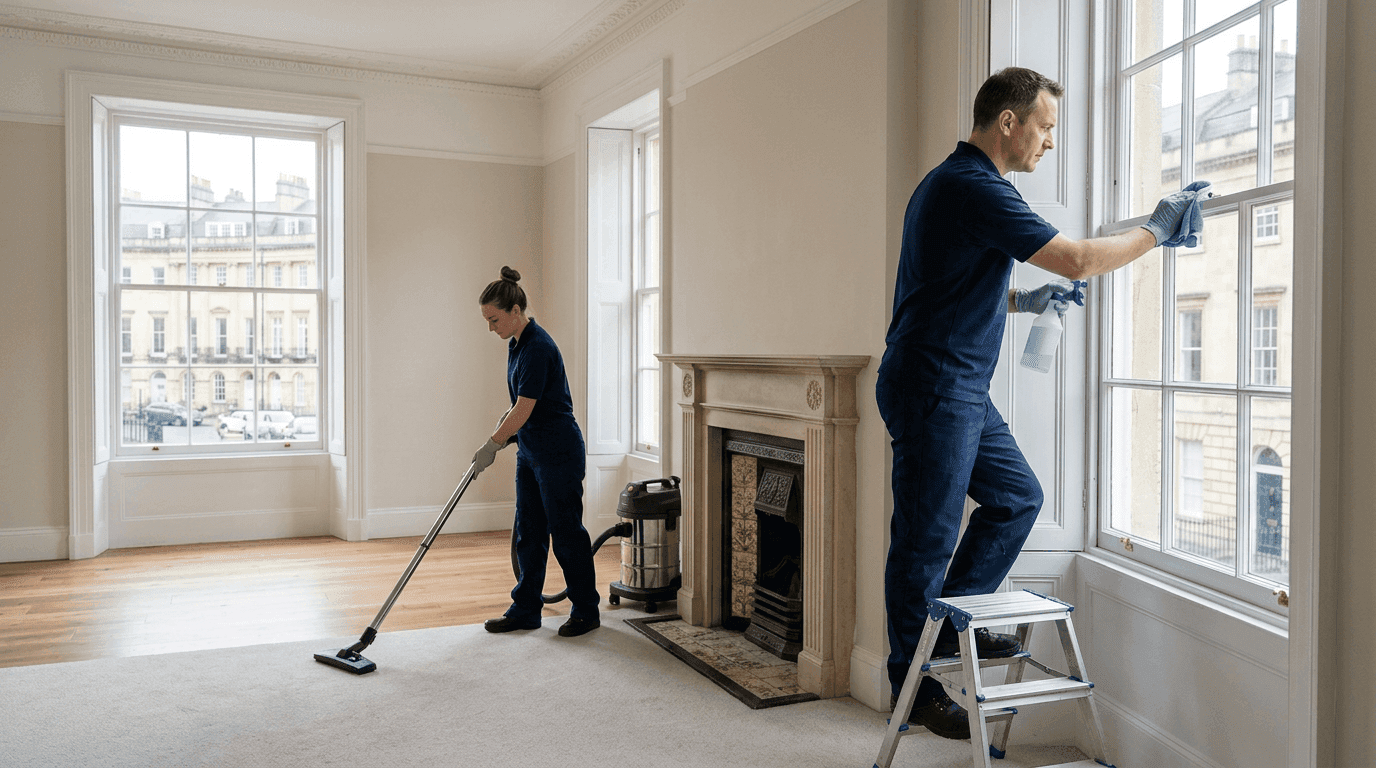
Cleaning an empty house before moving in is usually the most practical approach. With no furniture or boxes in the way, you can reach cupboard interiors, skirting boards, floor edges, window tracks and areas behind appliances that become difficult to access later.
For a house in Bath or the wider Bristol area, arrange the clean after painting, repairs or building work, but before carpets are cleaned and furniture arrives. The right scope depends on the property’s condition: a lightly used, empty house may suit a careful DIY clean, while a larger, recently renovated or heavily soiled property may be better suited to professional help.
Why clean before the move?
A move-in clean is more than a quick wipe of visible surfaces. It creates a practical starting point for the incoming household by dealing with the areas that are easiest to overlook once the property is occupied.
Prioritise:
- cupboard and drawer interiors
- appliance interiors, seals and filters
- skirting boards and door frames
- tops of cupboards and high ledges
- window sills and tracks
- areas behind or beneath accessible appliances
- bathroom fittings, tiles and grout
- carpets, hard floors and floor edges
An empty bedroom, for example, allows you to clean the full length of the skirting boards and floor edges before a bed or wardrobe is installed. In the kitchen, empty cupboards can be wiped properly rather than cleaned around stored food and crockery.
This is also different from treating an end-of-tenancy clean as a standard template. A move-in clean focuses on making the property ready for the next occupants, so the important question is not simply whether each room looks tidy. It is whether the surfaces and spaces you will rely on every day have been included in the scope.
Follow a high-to-low cleaning order
The most sensible sequence is to work from higher surfaces downwards, then finish with the floors. Dust from ceiling fixtures, vents, cupboard tops and door frames can otherwise settle on walls, skirting and floors that have already been cleaned.
Start with dry dusting and vacuuming where appropriate, then move to wet cleaning. Keep the floors until work above them is complete, and work towards the exit so you do not have to cross a finished area unnecessarily.
Start with high and overlooked surfaces
Use a torch or light during the initial walk-through to inspect:
- ceiling lights and fan blades
- air vents and covers
- the tops of doors and cupboards
- high ledges and picture rails
- behind radiators where accessible
- window tracks and sills
Dust these areas first. Then clean walls, door frames, doors, handles, switches and skirting boards. Test any cleaning product on an inconspicuous area before using it across a painted or delicate surface.
Give the kitchen a complete reset
A visible worktop is only one part of a kitchen clean. Empty the cupboards and drawers, vacuum out crumbs and dust, then wipe the shelves, sides, doors and handles. Remove old shelf liners if appropriate before cleaning the surface beneath them.
For appliances, include the parts that are likely to be missed:
- inside the oven and on the racks
- the hob and area beneath removable burner components
- the microwave interior and exterior
- the refrigerator shelves, drawers, seals and interior walls
- the dishwasher filter and interior surfaces
- the extractor hood and accessible filter
- the areas beneath or behind appliances where they can be safely reached
Degrease the hob, extractor and backsplash as required. Clean the sink and tap, then finish the kitchen floor after the other work has been completed. If an appliance is built in or cannot be moved safely, include the accessible edges in the agreed scope rather than attempting to force access.
Work methodically through the bathrooms
Apply suitable bathroom cleaner to the toilet, bath, shower and basin so it can work while you address another part of the room. Follow the product label, ventilate the room and never mix cleaning products.
Clean the toilet bowl, seat, exterior, base and area behind it. Descale suitable fittings, scrub tiles and grout where needed, and clean the shower screen or glass. Wipe the vanity, shelves, mirror, taps and extractor cover. Finish by cleaning the floor, paying attention to the edges around sanitaryware.
Bathroom limescale, marks and grout condition can vary considerably between properties. If a surface is delicate, damaged or porous, the cleaning approach should be agreed before work begins rather than assumed from a general checklist.
Finish bedrooms, living areas and access points
In bedrooms and living rooms, dust light fittings, vents, shelves, window sills, blinds and the tops of door frames. Wipe wardrobes, cupboard shelves, rails and cupboard floors before belongings are brought in.
Clean handles, switches and other frequently touched surfaces. Vacuum carpets thoroughly, including edges and accessible areas beneath radiators, then clean hard floors with a product suitable for their finish. Do not treat every floor as if it requires the same method.
Remember the entrance, stairs, landings and utility areas. Wipe the front door and entry storage, clean stair treads and rails, and inspect the washing machine seal, detergent drawer and dryer lint area where these are included in the scope.
Prepare the house before cleaning starts
Good preparation prevents a deep clean becoming a series of interruptions. Before the cleaner arrives, or before starting the work yourself:
- Remove rubbish, loose items and boxes from the rooms being cleaned.
- Empty cupboards, drawers and appliances that are part of the requested scope.
- Make sure every room can be entered and that the agreed surfaces are accessible.
- Check that water and electricity are available if the work requires them.
- Identify delicate finishes, areas that cannot be moved and anything requiring specialist attention.
- Photograph the rooms and any existing marks or damage, particularly in a rented or newly vacated property.
If decorating or repairs have created dust, deal with that work before the main clean. If carpets are being professionally cleaned, arrange that after the general high-to-low cleaning where possible, and before beds, sofas and other large furniture arrive.
When arranging a service, describe the property accurately. Mention the number of rooms, condition of the kitchen and bathrooms, carpeted areas, recent building work, difficult access and any surfaces you particularly need included. This gives the cleaning scope a useful basis instead of assuming that every deep-cleaning service covers the same tasks.
DIY or professional residential deep cleaning?
DIY is reasonable when the house is empty, access is straightforward, the condition is manageable and you have the time and equipment to work safely. It can also give you a close look at the property before your belongings arrive.
Professional residential deep cleaning may be more practical when:
- the house has many rooms or several floors
- there is substantial built-up grime
- carpets, bathrooms or kitchens need particular attention
- high or awkward areas are difficult to reach safely
- recent work has left widespread dust
- the move timetable leaves little time for cleaning
- you need the scope agreed clearly in advance
Carpet cleaning can be considered separately if the carpets need attention. Where the property has had renovation or construction work, ask whether a builder and sparkle clean is more appropriate than treating the property as an ordinary move-in clean.
The key decision is not whether professional help is automatically necessary. Consider the property’s condition, the surfaces you need covered, the access available and the effort your household can realistically provide. If you are arranging a clean in Bath or Bristol, you can review Urban Cleaning Ltd’s residential deep cleaning service and then discuss the property’s requirements directly.
Complete a final walk-through before unpacking
Once the main work is finished, inspect each room before boxes and furniture arrive. Use a torch along window tracks, high ledges and floor edges, and check the places most likely to disappear from view after the move:
- cupboard interiors and drawer corners
- appliance seals, filters and handles
- skirting boards behind doors
- areas behind radiators
- the tops of doors and cabinets
- bathroom corners and grout lines
- carpet edges and hard-floor perimeters
For a household, this is the opportunity to identify anything that should be addressed before unpacking. For a landlord or agent preparing a vacated property, a clear written scope and photographic record can help distinguish cleaning tasks from existing maintenance issues or damage.
A house in Bath does not automatically need the same cleaning plan as another house nearby. Adapt the scope to the condition, recent work, floor types, appliances and access. The consistent principle is to clean while the property is empty, work from high surfaces down, and leave floors until the end.
Arrange your move-in clean in Bath or Bristol
Urban Cleaning Ltd serves Bristol and Bath. To discuss a residential deep clean, the rooms and surfaces to include, or cleaning after recent work, use the contact page or call 0117 332 1241.
Opening hours are Monday to Friday, 08:00 to 17:00. Have the property details, access arrangements and preferred scope ready so the clean can be discussed in practical terms before moving day.