
Office Cleaning Contract: What to Check Before You Agree
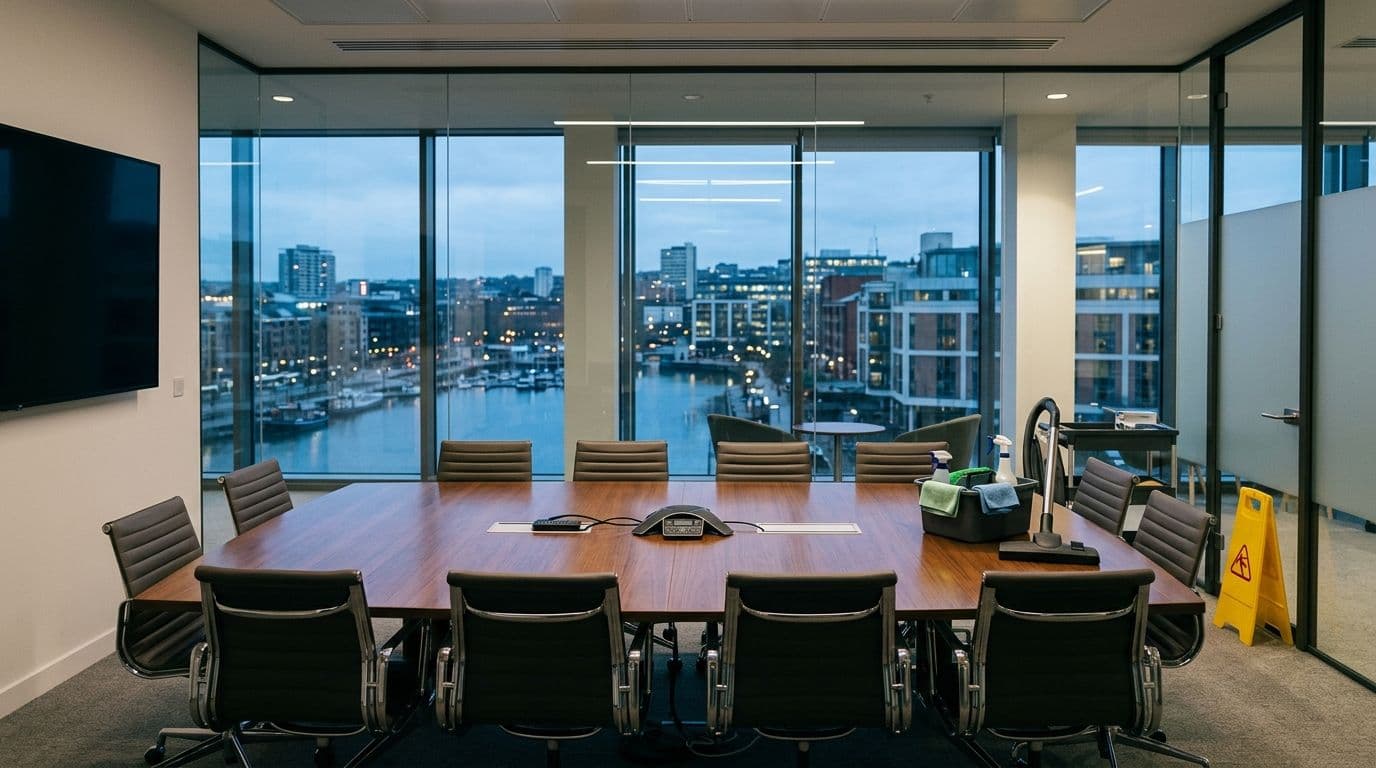
An office cleaning contract is a written service agreement between a cleaning provider and the organisation using the premises. It should make clear what will be cleaned, how often, which areas are covered, how the service operates and how either party can end or change the arrangement.
That definition is simple, but the useful detail sits underneath it. A phrase such as “general office cleaning” does not tell you whether kitchen surfaces, internal glass, desk areas, high-touch points or bin liners are included. Before agreeing to a proposal, make sure the written scope reflects the way your workplace is actually used.
This guide explains what to clarify when arranging or reviewing office cleaning in Bristol or Bath. The same approach can also be adapted for a regular household cleaning agreement.
Start with the scope of work
The scope of work is the practical centre of the contract. It should connect each area of the premises with the tasks expected there and the frequency of those tasks.
For a small office, the scope might cover:
- Washrooms: cleaning toilets, sinks, mirrors and floors.
- Kitchens or break rooms: wiping worktops, cleaning sinks, dealing with food-related waste and cleaning accessible appliance surfaces where agreed.
- Work areas: vacuuming or mopping floors, emptying bins and wiping surfaces that have been made available.
- Reception and shared areas: cleaning floors, doors, touchpoints and other agreed surfaces.
- Meeting rooms: cleaning tables, floors and other listed surfaces after use or as part of the regular visit.
The wording should also identify exclusions. For example, external windows, carpet extraction, post-event cleaning, high-level work or areas with restricted access may need to be agreed separately.
The more clearly the areas and tasks are described, the easier it is for both sides to recognise what has been included. A scope is not meant to list every possible cleaning request; it is meant to establish a dependable baseline.
For a household, the equivalent might list the rooms to be cleaned, the tasks required in each room and the intended visit days. The principle is the same: describe the work rather than relying on a broad label.
If you are preparing a Bristol office for discussion with a provider, see the office cleaning service in Bristol page for a relevant starting point.
Agree a realistic cleaning frequency
Frequency should reflect occupancy, footfall, layout and how each space is used. Not every room needs the same attention at every visit.
A specification might separate tasks in this way:
- Each visit: washroom cleaning, bin emptying, floor care and kitchen or break-room surfaces.
- Weekly: skirting boards, less accessible ledges, detailed cleaning of shared areas or other tasks that do not need to happen every visit.
- Monthly or periodically: high dusting, internal glass, carpet treatment or other planned work.
These are examples of how to structure a schedule, not a universal prescription. A busy workplace with frequent visitors may need a different pattern from a small office that is occupied only occasionally.
Be precise about what “weekly” means. Does it refer to a particular weekday, one task during any visit that week or a separate periodic visit? Also record how public holidays, office closures, evening events and changes to opening hours will be handled.
A useful office cleaning schedule can help you think through daily, weekly and less frequent tasks before reviewing a contract.
Prepare before requesting proposals
A short walk-round note can make the conversation much more productive. You do not need a complicated facilities document. Record the information that affects the proposed scope:
- Mark the main rooms and shared areas on a simple floor plan.
- Note floor types, washroom numbers, kitchen or break-room areas and spaces that are rarely used.
- Highlight priority areas, such as entrances, heavily used washrooms or visitor-facing spaces.
- Record any rooms that are restricted, occupied late or unavailable during the intended cleaning period.
- Note whether desks are usually clear enough for surfaces to be wiped.
- Identify any periodic work you may want to discuss separately.
This preparation helps avoid comparing proposals based only on a headline price or a short description. It also gives the provider a clearer picture of the premises and lets you ask whether the proposed frequency fits the actual use of the building.
Clarify access and security routines
Office cleaning often takes place before or after the main working day. The contract should therefore explain how the cleaning team enters and leaves the premises.
Clarify:
- Who provides keys, access fobs or other entry arrangements.
- Which person is responsible for issuing or retrieving access items.
- What happens if the usual contact is unavailable.
- How alarm procedures are communicated.
- Which doors, rooms or storage areas are excluded from access.
- What is expected when the premises are secured at the end of the visit.
- How an access problem or change to closing arrangements is reported.
Avoid leaving these details in an informal conversation that staff may not hear about. A written process is easier to follow when office managers, cleaners or building contacts change.
Access should also be considered alongside timing. If staff regularly work late, an agreement that simply says “out-of-hours cleaning” may not be specific enough. Record the agreed access window and how occasional changes are requested.
Set out consumables and equipment responsibilities
Small supplies can cause recurring confusion if nobody knows who provides or replaces them. State clearly who is responsible for purchasing, storing and replenishing items such as:
- Toilet paper.
- Hand soap.
- Paper towels.
- Bin liners.
- Other dispenser supplies used in the premises.
The contract should also explain whether cleaning products and equipment are supplied as part of the service or whether the client is expected to provide anything. If an item is not included, it is better to know before the first visit than when it runs out.
Do the same for storage. Identify where agreed supplies or equipment may be kept and who can access that area. This is particularly useful in smaller offices where cupboard space is limited.
Explain desk-clearing expectations
Desk areas need their own practical instruction. A cleaner may be able to wipe an empty surface, but personal items, papers, devices or confidential material can make some desks unavailable.
Your office cleaning contract can state:
- Whether staff are expected to clear desks before cleaning.
- Which surfaces are included when desks are not clear.
- Whether devices, paperwork or personal belongings will be left untouched.
- How staff should request attention to a shared workstation or meeting table.
This is not merely an administrative detail. It prevents staff from assuming that every visible surface will be moved and cleaned, while the cleaning team assumes that only accessible areas are in scope.
Build a straightforward issue-reporting process
Even a carefully planned service may need adjustments. A contract should say who reports a missed task, which communication route is used and how a request for a re-clean or change is recorded.
Keep the process specific. For example, a report could identify:
- The date of the visit.
- The room or zone affected.
- The task that was missed or needs attention.
- Any access issue that prevented completion.
- The person responsible for receiving the report.
It is also useful to distinguish between a missed task and a new request. Cleaning an agreed washroom is different from asking for an additional room, a post-event clean or a specialist treatment. Keeping those categories separate makes discussions clearer.
If you want to discuss an office cleaning requirement with Urban Cleaning Ltd, you can use the contact page or call 0117 332 1241. Urban Cleaning Ltd serves Bristol and Bath and is open Monday to Friday from 08:00 to 17:00.
Review the commercial terms carefully
The price only makes sense alongside the scope and frequency. When reviewing a proposal, check that the commercial terms match the premises notes you prepared.
Look for:
- The areas included in the quoted service.
- The agreed visit pattern.
- Any assumptions about access or desk availability.
- Whether consumables are included, excluded or handled separately.
- How additional work is requested and priced.
- Whether periodic tasks have been included or listed separately.
- When invoices are issued and when payment is due.
- How changes to the premises or schedule affect the agreement.
Ask for unclear wording to be explained in plain English. If a conversation changes the scope, make sure the written proposal or contract is updated rather than relying on an informal promise.
Check the notice period and change process
The notice period determines how much advance warning either side must give when ending the arrangement. Read it before signing, not when you are already considering a change.
Also check:
- The initial term of the agreement.
- Whether it renews automatically or continues on a rolling basis.
- How notice must be given.
- Whether there is a process for ending the agreement if the service repeatedly fails to match the written scope.
- What happens to keys, access items and stored supplies when the service ends.
- How changes to the premises, occupancy or cleaning frequency are agreed.
A longer commitment is not automatically unsuitable, and a shorter arrangement is not automatically better. The important point is that the term should be understandable and workable for your circumstances.
Keep the contract current after it starts
An office cleaning contract should not be treated as a document that is filed away permanently. Review it when the workplace changes.
Useful triggers for a review include:
- A new room, kitchen or break area is added.
- A team moves into a previously unused space.
- Opening hours or evening access arrangements change.
- The office layout is redesigned.
- Occupancy increases or falls significantly.
- Staff routines change, affecting desk-clearing or meeting-room use.
- A recurring task is no longer needed or a new priority emerges.
When you discuss a change, describe the affected area, task and frequency. Keep a short written record of the agreed adjustment and any related change to the commercial terms.
The same habit works at home. If a household’s rooms, routines or priorities change, review the regular cleaning agreement rather than assuming the original list still fits.
Common misconceptions about cleaning contracts
“Office cleaning” covers everything
It does not necessarily. The phrase may describe the type of service, but the scope should identify the actual rooms, tasks and frequencies. Specialist or periodic work may be separate.
The cheapest proposal is the easiest to compare
A lower headline figure may reflect fewer visits, fewer tasks, fewer areas or different assumptions about consumables. Compare like with like by using the same premises notes and questions for each proposal.
A verbal agreement is enough for a small office
Small premises still have access arrangements, supplies, timings and expectations to coordinate. A short written agreement can prevent misunderstandings without needing unnecessary complexity.
Staff will know what to do without a written routine
They may not. Desk-clearing, access, reporting and consumables responsibilities are easier to follow when they are recorded and shared with the relevant people.
The original scope will always remain suitable
Workplaces change. A periodic review helps ensure the written agreement still reflects the rooms, routines and priorities on site.
A practical next step
Before contacting a provider, prepare a simple walk-round note: list the areas, mark priority spaces, describe the main tasks and suggest the frequency you believe each task needs. Then use that note to review the proposed scope, access arrangements, consumables, issue-reporting process and notice period.
A useful office cleaning contract is specific enough to guide everyday work but clear enough to be reviewed when the premises change. For Bristol or Bath enquiries, contact Urban Cleaning Ltd or explore the office cleaning service in Bristol.