
Upholstery Cleaning: What to Expect and How to Prepare
By Urban Cleaning7 min read
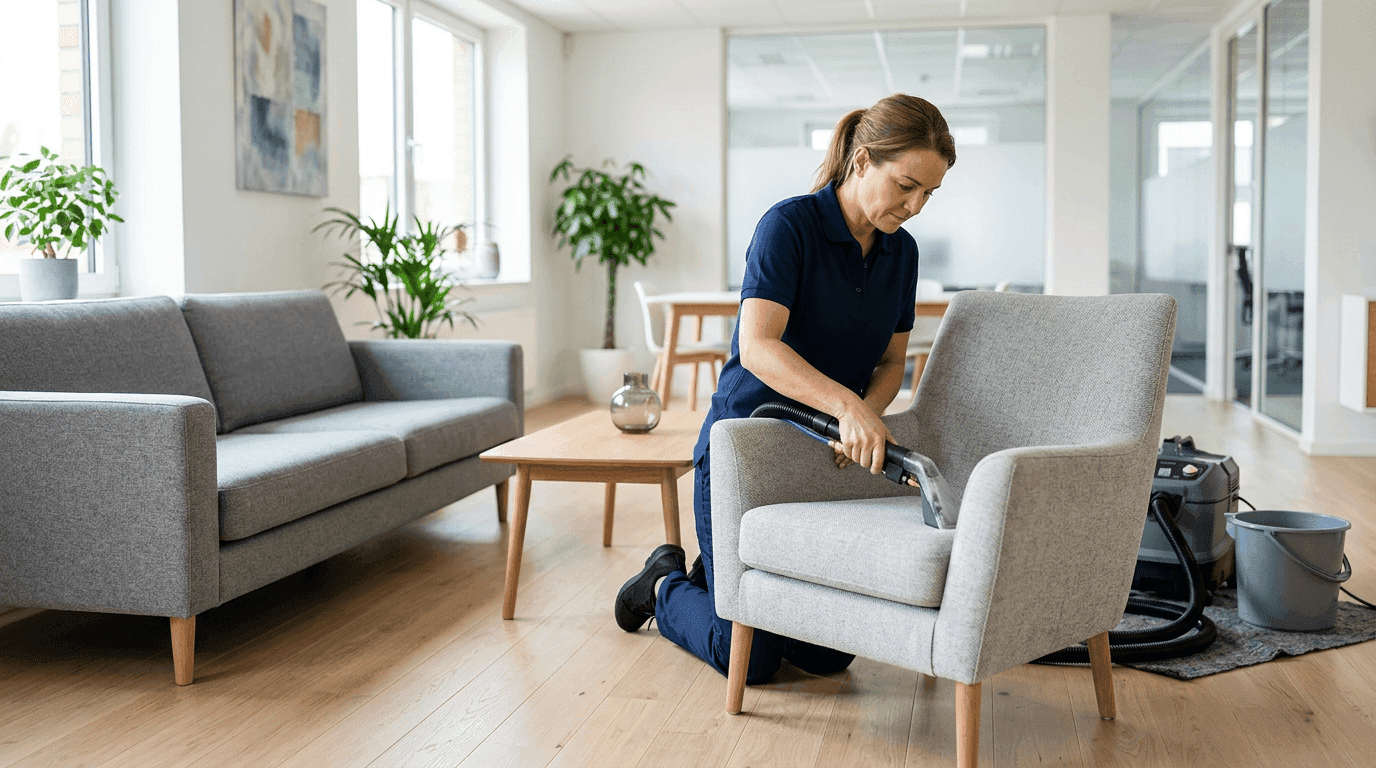
Upholstery cleaning is the planned cleaning of fabric-covered furniture and soft furnishings, including sofas, armchairs and cushions. The suitable approach depends on the individual item, its fabric and its care information, so one sofa should not automatically be treated in the same way as another.
For households and businesses in Bristol and Bath, the sensible starting point is to identify the furniture, check its care information and describe its condition accurately. Routine vacuuming and careful spill management remain useful between services, but they are not the same as arranging professional attention for upholstery that has accumulated general soil or needs more considered care.
What does upholstery cleaning involve?
Upholstery cleaning concerns the fabric-covered parts of furniture rather than just the visible surface. This may include:
- sofas and sofa cushions;
- armchairs and other upholstered seating;
- removable cushion covers; and
- soft furnishings used in homes, offices and other workplaces.
Each item needs to be considered on its own terms. A removable cover may have different care information from the cushion or frame beneath it. The fabric, the type of mark and any previous treatment can all affect what is suitable.
That is why it is useful to have the manufacturer’s information available before making an enquiry. A clear description helps a cleaner consider whether the furniture appears suitable for the proposed service and what further information may be needed. You can read more about the relevant service on the carpet and upholstery cleaning service page.
When might professional help make sense?
Professional advice may be appropriate when upholstery has accumulated general soil, when a frequently used sofa needs planned attention, or when the furniture is difficult to maintain through ordinary household routines alone. It may also be worth enquiring before a change of use, such as preparing seating in a home, office or other workplace for continued use.
The decision is not based only on how visible a mark is. Consider:
- whether the fabric is known and whether its care information is available;
- whether cushions or covers can be removed;
- whether there are delicate areas, loose seams or existing damage;
- whether a previous spot treatment has changed the appearance; and
- whether access or disruption matters in the room or workplace.
A small workplace, for example, can explain the type and location of its seating, access arrangements and any available care-label information before booking. A household can identify whether a mark is recent or established and whether the cushions are removable. In either case, ask about suitability for the specific fabric and furniture rather than assuming that every upholstered item can be treated alike.
How to prepare a sofa or upholstered seating
Good preparation is mainly about providing accurate information and making the furniture accessible. Before an appointment or enquiry:
- Check the care information. Look at manufacturer labels on removable covers and note any cleaning symbols or instructions. Keep other product information available if you have it.
- Describe the condition honestly. Mention visible marks, delicate areas, loose seams, damage and any products or home treatments already used.
- Remove loose items. Clear cushions, throws, toys, paperwork and other objects from the furniture. Keep removable covers separate so they can be described accurately.
- Vacuum accessible areas where appropriate. If the furniture and its care information allow routine vacuuming, clean beneath removable seat cushions and along seams.
- Clear the surrounding area. Move nearby items so there is comfortable access to the sofa or seating and the surrounding floor.
The same sequence works for a Bristol or Bath home, office or workplace. Locality does not remove the need to check the specific furniture and its care information.
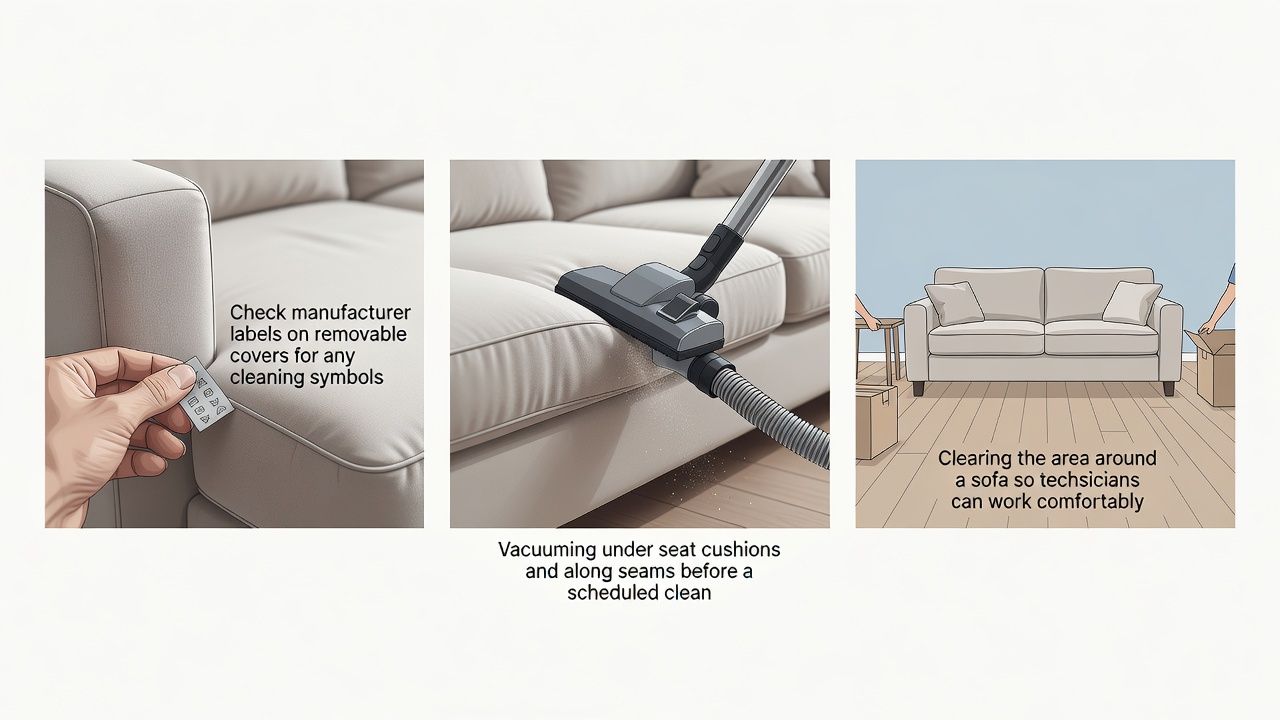
Prepare upholstery by checking care information, vacuuming accessible seams and clearing the work area.
What should you do about a fresh spill?
Act cautiously rather than reaching immediately for a household product. For a fresh drink spill on a sofa cushion, gently press a clean absorbent cloth onto the area to blot it. Avoid aggressive rubbing, which can spread the liquid or disturb the fabric’s surface.
The substance, fabric and age of the mark all matter. A product that is suitable for one furnishing may be unsuitable for another, and a home remedy can make a mark or colour change harder to assess. If the care label is unclear, the fabric appears delicate, or an earlier treatment has altered the appearance, describe the situation when contacting a cleaner instead of adding another treatment.
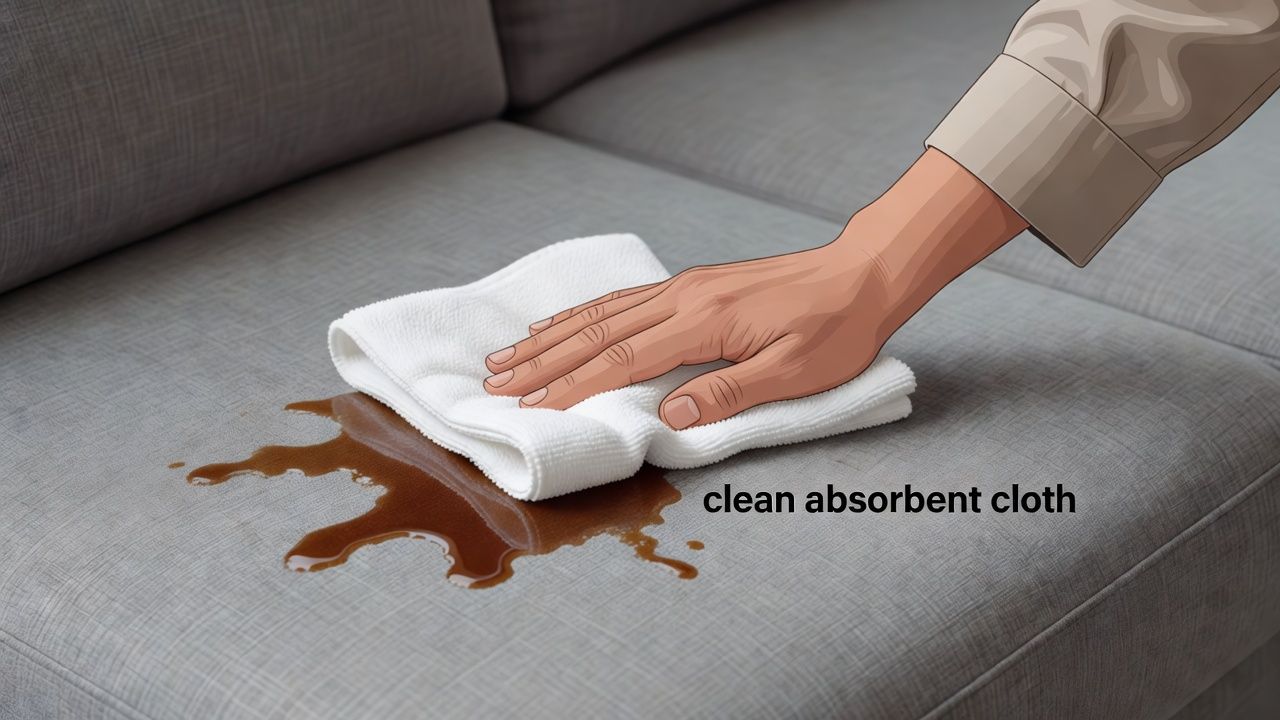
Blot a fresh drink spill gently with a clean absorbent cloth.
Maintaining upholstery between services
Professional upholstery cleaning works best as part of a sensible care routine rather than as a replacement for one. Useful habits include:
- vacuuming accessible surfaces, seams and areas beneath removable cushions when permitted by the furniture’s care information;
- blotting fresh spills gently with a clean absorbent cloth;
- keeping manufacturer information and care labels available; and
- avoiding products simply because they worked on a different fabric or furnishing.
Businesses can include upholstered seating in ordinary cleaning checks and report new marks or damage early. Households can do the same during routine room cleaning. These habits help you notice changes and provide more useful information if professional advice is needed.
If nearby carpeted areas also need attention, treat that as a separate consideration: upholstery and carpets are different surfaces. For Bristol properties, see the carpet cleaning service in Bristol rather than assuming that advice for one surface automatically applies to the other.
Questions to ask before arranging upholstery cleaning
A short, accurate enquiry can make the next step clearer. Have the following information ready:
- What type of furniture is it: sofa, armchair, cushion or another upholstered item?
- Is the fabric known, and what does the care label say?
- Are the covers removable?
- What marks or general soiling are present, and when were they noticed?
- Has anything already been applied to the fabric?
- Are there loose seams, delicate areas or existing damage?
- Is access straightforward, or are there workplace restrictions to consider?
- Is the item suitable for the proposed service, and how should the room be prepared?
For workplace seating, also explain where the furniture is located and how the area will be managed during the visit. For a household, mention stairs, narrow access or furniture that cannot easily be moved if these details affect access.
Common misconceptions about upholstery cleaning
“Every sofa can be cleaned in the same way”
No. Furniture, fabrics, covers and care instructions differ. Suitability should be considered item by item.
“A strong product is always the best response to a stain”
Not necessarily. The wrong product can complicate the condition of the fabric. Start with the care information and describe any previous treatment before applying anything further.
“Rubbing a spill removes it faster”
Vigorous rubbing can spread a fresh spill or disturb the fabric. Gentle blotting with a clean absorbent cloth is the more cautious immediate response.
“Routine vacuuming replaces professional upholstery cleaning”
Vacuuming is useful for everyday care, but it does not answer every question about accumulated soil, fabric suitability or difficult-to-maintain furniture. It should be viewed as maintenance between considered cleaning decisions.
“A visible mark tells you exactly what treatment is needed”
A mark’s appearance alone does not identify the fabric, substance or safest approach. Describe both the furnishing and its history when asking for advice.
Arranging an enquiry in Bristol or Bath
Urban Cleaning Ltd serves Bristol and Bath. When you enquire, provide the furniture type, fabric information if known, care-label details, marks, previous treatments and access requirements. You can use the contact page or call 0117 332 1241. Urban Cleaning Ltd is open Monday to Friday, 08:00 to 17:00.
The practical sequence is straightforward: identify the item, check its care information, manage fresh spills cautiously, prepare the space and maintain the upholstery between services. That gives households and businesses a clearer basis for deciding whether professional upholstery cleaning is appropriate for their particular furniture.