
How to Remove Coffee Stains from Office Carpet
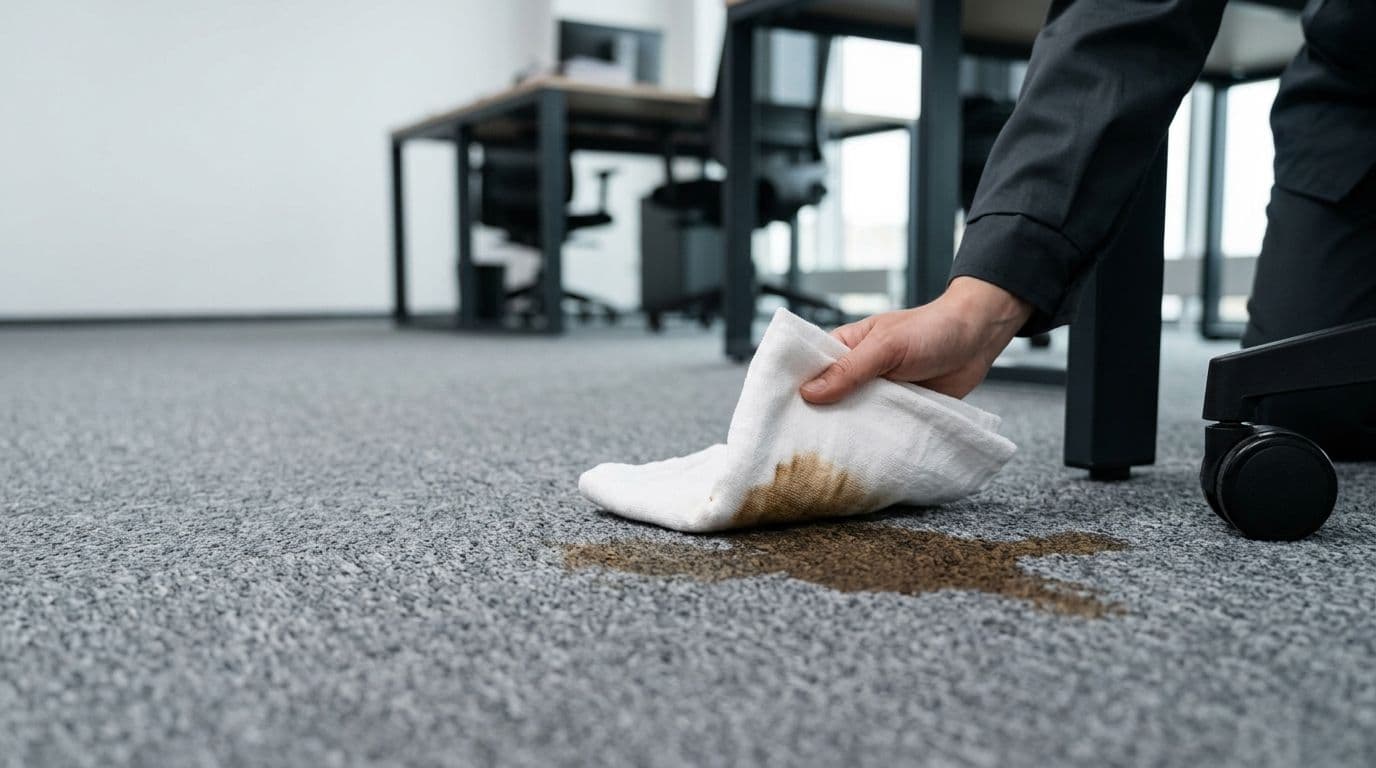
Coffee on office carpet needs a controlled response, not vigorous scrubbing. The priority is to contain the spill, absorb as much liquid as possible and use only a small amount of tested cleaning solution. The right approach also depends on the carpet fibre, backing, drink ingredients and whether the mark is fresh or dried.
The same method can suit a home-office or household carpet, but commercial spaces need extra care because damp areas may be walked through, covered by furniture or spread across carpet tiles.
Before you start: gather supplies and assess the mark
Remove the mug, loose objects and any movable furniture from the area. Keep people away from the spill so chairs, bags and shoes do not push coffee further into the carpet.
Gather:
- White or colourfast cloths
- Kitchen roll
- A spoon or blunt edge for lifting residue
- Cool water
- A small amount of mild washing-up liquid
- A clean bowl
- A dry towel
Before applying anything, check the carpet care information if it is available. Test the planned cleaning mixture in an inconspicuous area and leave it long enough to check for colour or texture changes. Stop if the carpet colour transfers or the pile changes.
Then identify three things:
- What was spilled? Black coffee is different from coffee containing milk, cream, sugar or flavouring. Milk-based drinks may leave a sticky or organic residue as well as brown colour.
- Is the mark fresh or dried? A wet spill should be dealt with by absorption first. A dried ring needs cautious rehydration.
- How far has it travelled? A small splash beside a workstation is more manageable than a large spill across a corridor or into carpet-tile joins.
Avoid rubbing, scrubbing, hot water, strong chemicals and soaking the carpet backing or underlay.
How to remove a fresh coffee stain from office carpet
Follow these steps while the spill is still wet.
1. Lift any solids or pooled liquid
If the drink contained sugar, cream or other residue, use a spoon or blunt edge to lift anything sitting on the surface. Work from the outside towards the centre and avoid dragging the residue across clean carpet.
If there is pooled coffee, place kitchen roll or a clean white cloth over it and press down gently. Lift the cloth rather than sliding it.
2. Blot from the outside towards the centre
Press a clean section of cloth or kitchen roll directly onto the spill, then lift it away. Repeat with fresh or dry sections as they become damp. Work around the outer edge first, gradually moving towards the centre.
The aim is to transfer coffee into the cloth, not to work it deeper into the pile. Do not rub horizontally across the stain, even if the colour appears stubborn.
3. Dilute cautiously with cool water
If coffee colour remains, lightly dampen a clean cloth with cool water and dab the mark. Avoid pouring water directly onto the carpet. Use small amounts, then blot immediately with a dry section of cloth.
Repeat the dampen-and-blot action only while it is reducing the visible coffee colour. If the area begins to spread or the carpet becomes saturated, stop adding water.
4. Use a small amount of mild washing-up liquid if needed
After the hidden-area test, place a small amount of diluted mild washing-up liquid on a clean cloth, not directly on the carpet. Dab the affected area and blot between applications. Keep the treatment local and use no more liquid than necessary.
When the mark has reduced, use a separate cloth lightly dampened with clean water to blot away detergent residue. Finish by pressing a dry towel over the area.
Expected result: the coffee colour should be less visible and the spill should not have spread. A faint shadow or ring may remain, particularly on pale carpet or where the liquid reached the backing. Do not keep escalating the treatment simply because the result is not immediate.
Example: for black coffee spilled beside an open-plan workstation, isolate the area, work around the outside edge and keep rolling chairs away until the carpet is dry. The same process can be used for a small spill on a home-office rug.
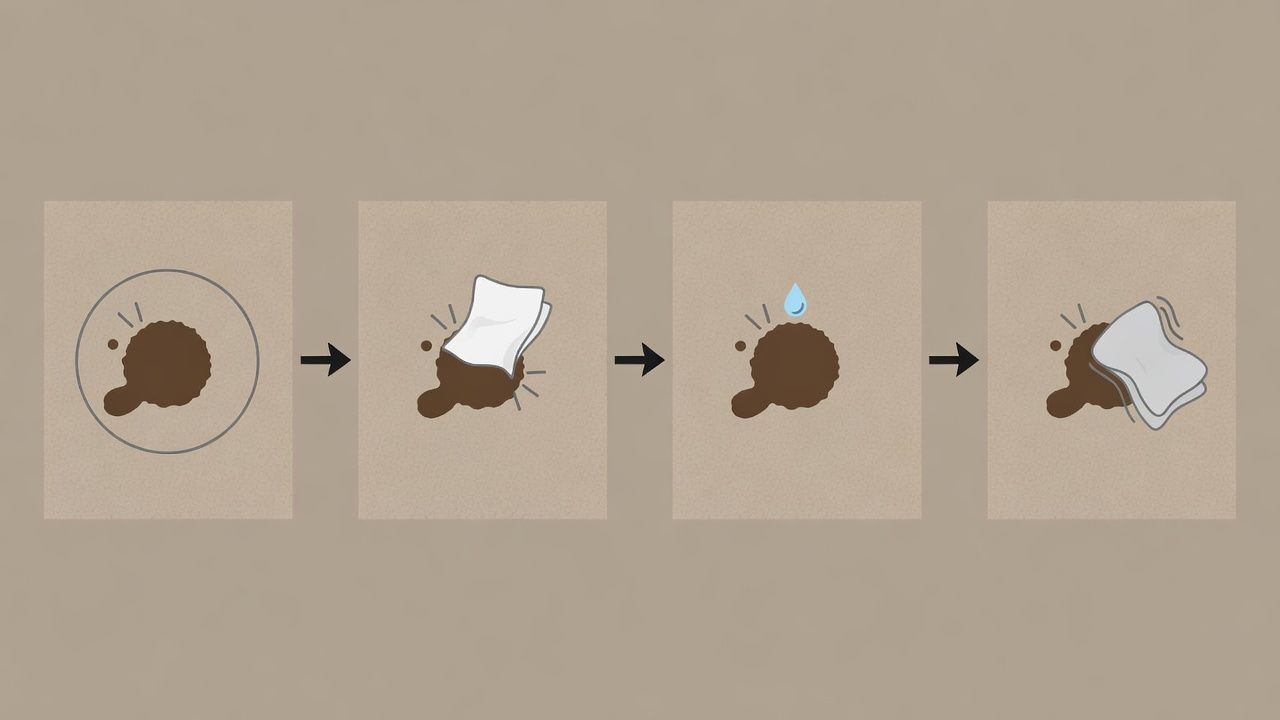
Work from the outside towards the centre and blot between each small application.
How to treat a dried or set-in coffee mark
A dried cappuccino ring in a meeting room or reception area needs patience rather than aggressive brushing. The longer the mark has been present, the less suitable repeated surface treatments may be.
1. Remove loose residue
Gently lift any dry flakes or surface residue with a spoon or blunt edge. Do not scrape hard enough to pull at the carpet fibres.
2. Rehydrate the mark sparingly
Place a barely damp cloth over the affected area briefly to soften the dried residue. Do not saturate the carpet. Lift the cloth, blot the softened mark and check whether colour is transferring.
3. Apply a tested mild solution
If the carpet passes the hidden-area test, apply a small amount of diluted mild washing-up liquid to a clean cloth. Dab from the outside towards the centre, blotting regularly with a dry section.
Use a second cloth lightly dampened with clean water to reduce any detergent residue. Finish with a dry towel and allow the area to become fully dry before judging the result.
4. Stop if the carpet reacts
Do not move on automatically to bleaching agents, harsh chemicals or vigorous brushing. If colour transfers to the cloth, the pile changes, the mark spreads or the carpet backing becomes wet, stop and record what has happened.
Expected result: a dried mark may soften or become less noticeable, but a set-in stain may not be suitable for further DIY treatment. A large corridor spill or a stain that has travelled beneath furniture can require a more controlled professional assessment. For local help, see Urban Cleaning’s carpet cleaning service in Bristol and Bath.
Adjust the approach for coffee type and carpet conditions
Black coffee
Treat black coffee as a coloured liquid: absorb it first, dilute cautiously and remove any cleaning residue. A small mark on hard-wearing carpet may respond well to this limited treatment.
Coffee with milk, cream or sugar
A latte, cappuccino or sweetened drink can leave more than a brown mark. Sticky residue may attract dirt, while milk or cream can contribute to an unpleasant smell if it remains in the carpet. Avoid repeatedly wetting the same area. Blot carefully, use minimal tested solution and rinse away residue with a lightly damp cloth.
Pale, patterned, wool or strongly coloured carpet
Do not assume that a solution safe for one carpet is safe for another. Check the care information and test first, especially where the carpet is wool, pale, patterned or strongly coloured. If the test cloth picks up carpet dye, stop immediately.
Modular office carpet tiles
Keep liquid away from joins and avoid pushing water beneath the tiles. Treat only the affected surface with the smallest practical amount of moisture. If coffee has reached the edges, lifted a tile or spread beneath furniture, pause DIY treatment and document the location for the cleaner.
Dry and protect the treated area
Drying is part of the cleaning process. Press a dry towel over the spot until it is no longer picking up obvious moisture. Keep chairs, bags and foot traffic away while the surface is damp.
Check for detergent tackiness. If the carpet feels sticky, use a separate cloth with a small amount of clean water and blot again rather than adding more soap. Do not use heat as a shortcut, and do not vacuum until the area is fully dry and the carpet is suitable for vacuuming.
In a busy office, place a temporary note or barrier beside the workstation or meeting-room area. Record the location, the type of coffee and the products already used so another person does not unknowingly layer a different treatment over it.
For preparation advice before arranging a wider professional clean, see how to prepare for a professional carpet clean.
Troubleshooting common coffee-stain problems
The stain is spreading
Stop adding liquid. Return to gentle edge-to-centre blotting with a clean, dry cloth. Check whether the damp area extends beyond the original spill and keep furniture and foot traffic away.
A ring has appeared
A ring can indicate that too much moisture or cleaning residue has been left around the original mark. Do not scrub the perimeter. Reduce residue with a lightly damp clean cloth, then blot dry.
The colour is transferring from the carpet
Stop immediately. Do not apply more solution or continue blotting forcefully. Carpet dye transfer means the chosen treatment may not be compatible with the surface.
The area remains sticky or smells unpleasant
Remove residue cautiously with a separate cloth lightly dampened with clean water, then blot thoroughly. If tackiness or odour remains, stop repeating the same treatment.
The stain returns after drying
A returning mark may mean coffee or cleaning residue remains deeper in the pile or backing. Avoid adding more household products. Photograph the area, note the spill size and explain what has already been applied when contacting a professional cleaner.
Several products have already been used
Do not layer another product over them. Give the cleaner a full record of the products, approximate area treated and any changes in colour, texture or smell.
For repeated stains, large spills or commercially important carpet, contact Urban Cleaning to discuss the next step in Bristol or Bath. You can also call 0117 332 1241 during the stated opening hours.
Completion check: is the carpet ready to use?
Before returning furniture or normal foot traffic, inspect the treated area from several angles in normal light. Check both the centre and perimeter against the surrounding carpet.
Then confirm:
- The surface is no longer damp to the touch.
- A clean, dry white cloth does not pick up obvious moisture or colour when placed lightly over the area.
- There is no sticky detergent residue.
- No larger ring has formed around the original mark.
- The pile has not changed noticeably.
- Furniture is not trapping moisture beneath it.
- There is no lingering unpleasant smell.
If these checks pass but the mark remains visible, record it as an unresolved stain rather than applying increasingly strong DIY treatments. Prompt reporting, sensible mug placement, regular vacuuming and a clear office process for isolating spills can all reduce repeat problems.
The decision is straightforward: blot fresh coffee promptly, use minimal tested moisture, treat dried marks cautiously and stop when the carpet spreads, transfers colour, remains tacky or refuses to improve. Urban Cleaning can discuss professional carpet cleaning for a repeated, large or set-in stain in Bristol and Bath through the service page or contact page.